All articles
Stylist tips
WHAT TO WEAR WITH A TRENCH COAT: 8 LOOKS FROM STYLISTS
How to Wear a Trench Coat in Fall: 8 Ready-to-Wear Looks, How to Choose the Right Length and Color, Why Burgundy Works Better Than Beige, and What to Do About ONE SIZE

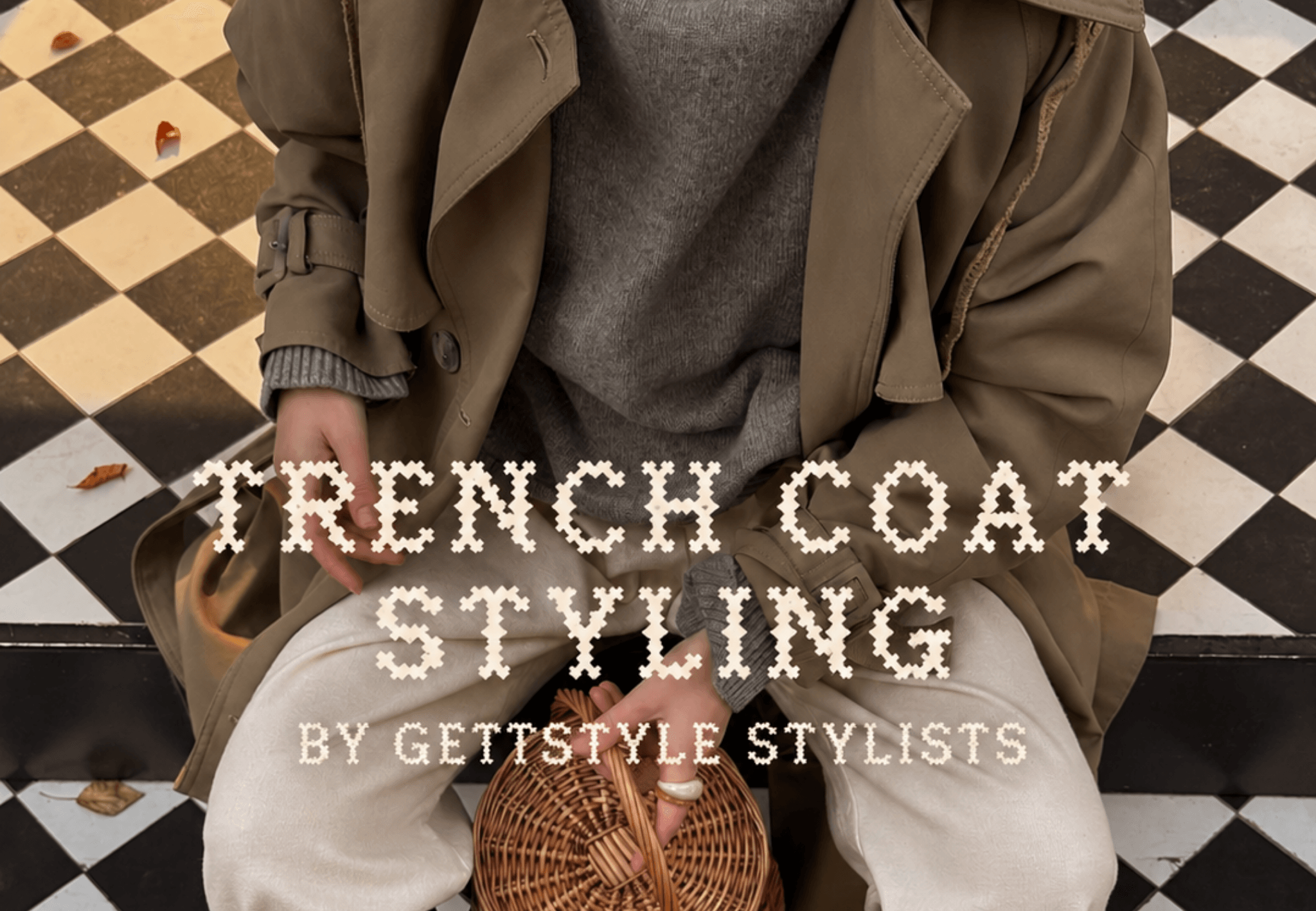
What to wear with a trench coat ⠀ ⠀ A trench coat pairs with almost everything, but it works by one rule: it sets a vertical line, so everything under it should support that vertical, not break it. Straight jeans, tailored trousers, a midi dress, a narrow skirt — yes. Voluminous bottom plus voluminous top under a voluminous trench — no. ⠀ ⠀ ⠀ ⠀
Below — how to choose a trench for yourself by three parameters, eight ready-made looks, and something rarely written about: why most designer trench coats are made in ONE SIZE and how to tell if this cut will suit you. ⠀
How to choose a trench coat⠀ ⠀ ⠀⠀ ⠀
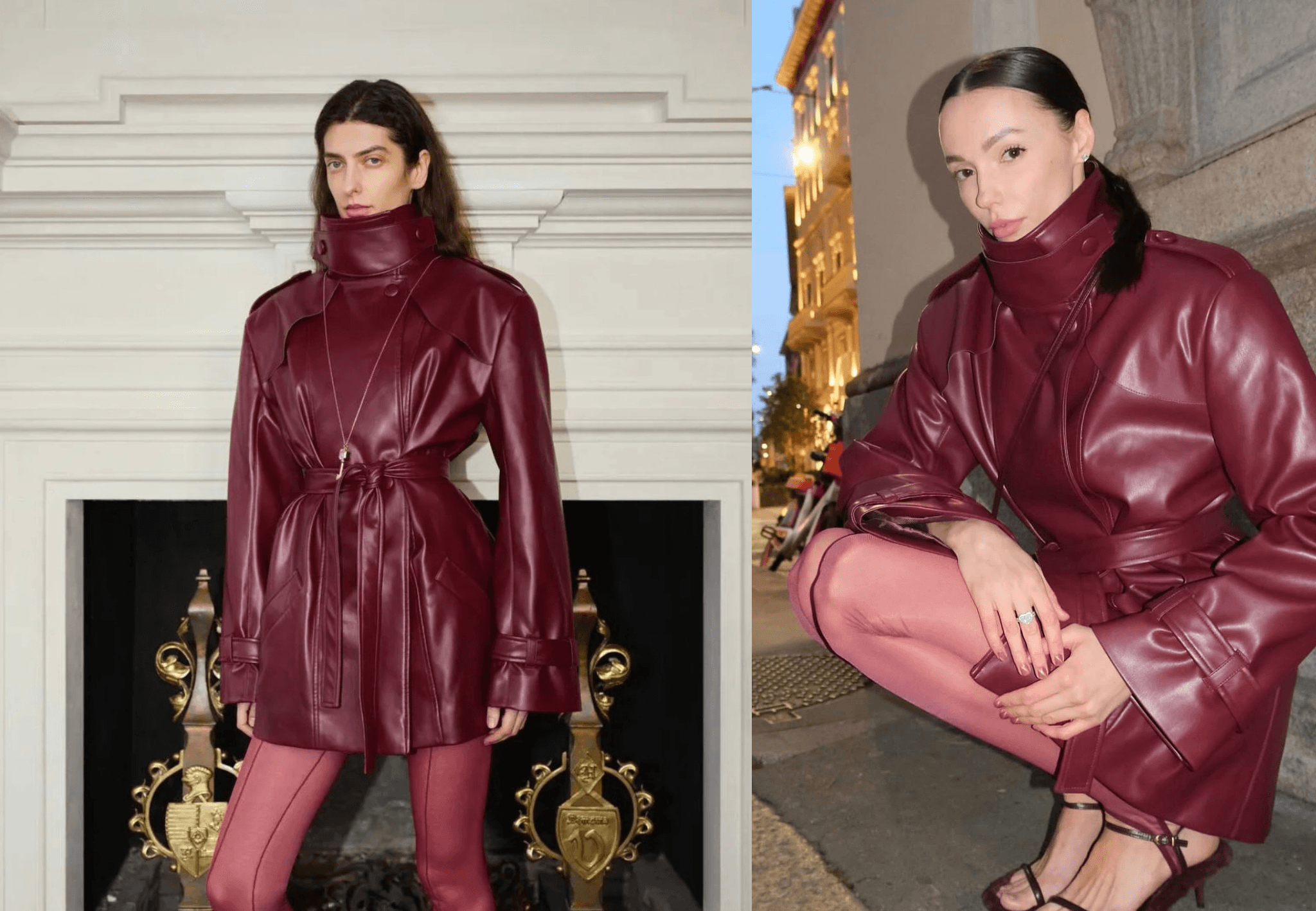
Length: three options and who they suit Length is a parameter that decides more than color and fabric combined. A mistake here can't be fixed by shoes or accessories.⠀ ⠀ Short (to mid-thigh). The most universal option. Works with any height, convenient for the city, looks good with wide pants — because it doesn't "eat up" their volume. The only limitation: if your goal is to correct volume in the hip area rather than draw attention to it, it's better to choose longer options. ⠀ ⠀ ⠀ ⠀
 ⠀
⠀
⠀
⠀
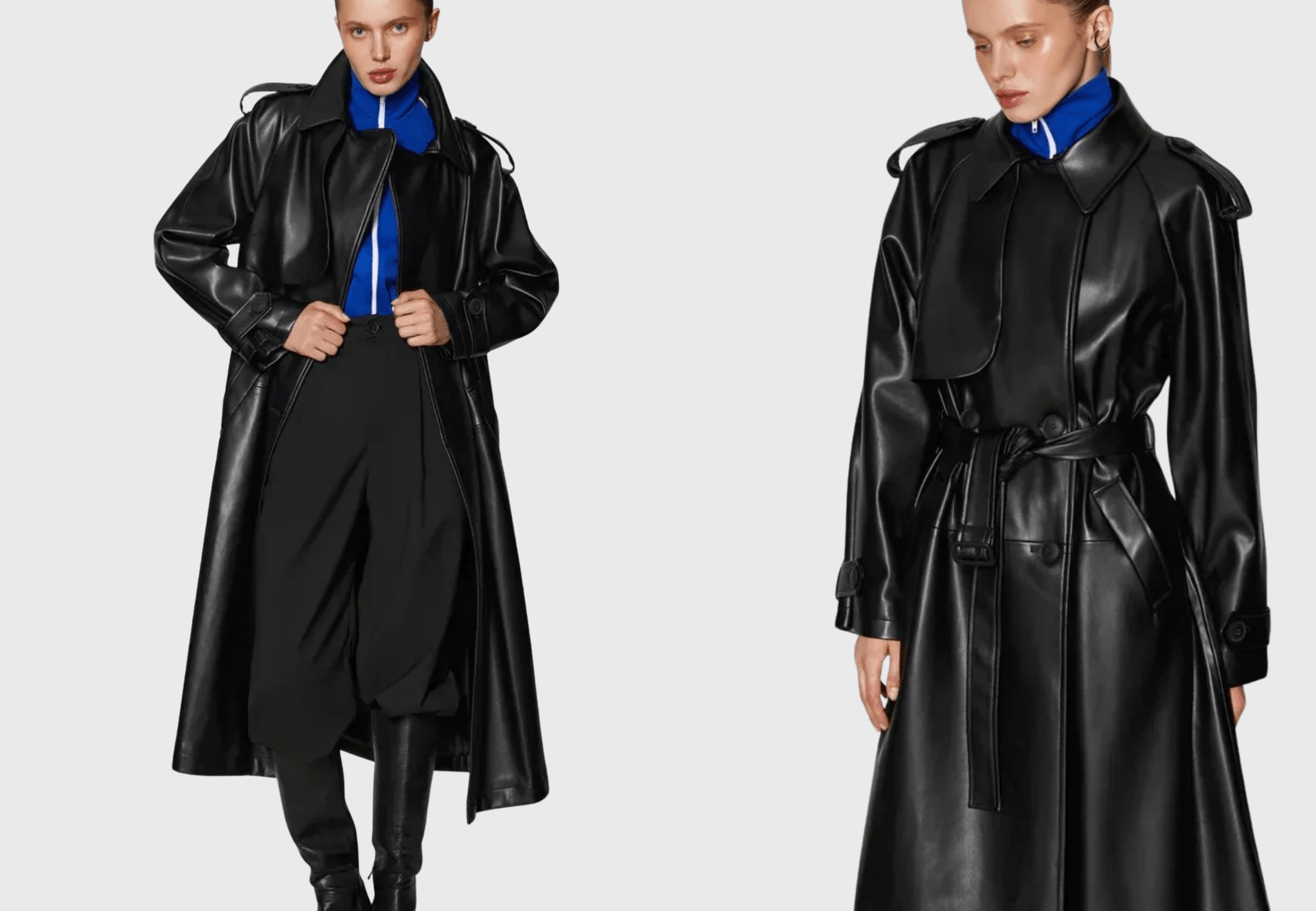
Midi (below the knee). The classic trench length and the most versatile. The hem should end below the knee but above the middle of the calf — it's exactly in this range that the silhouette reads as most slender. ⠀ ⠀
 ⠀
⠀
⠀
⠀
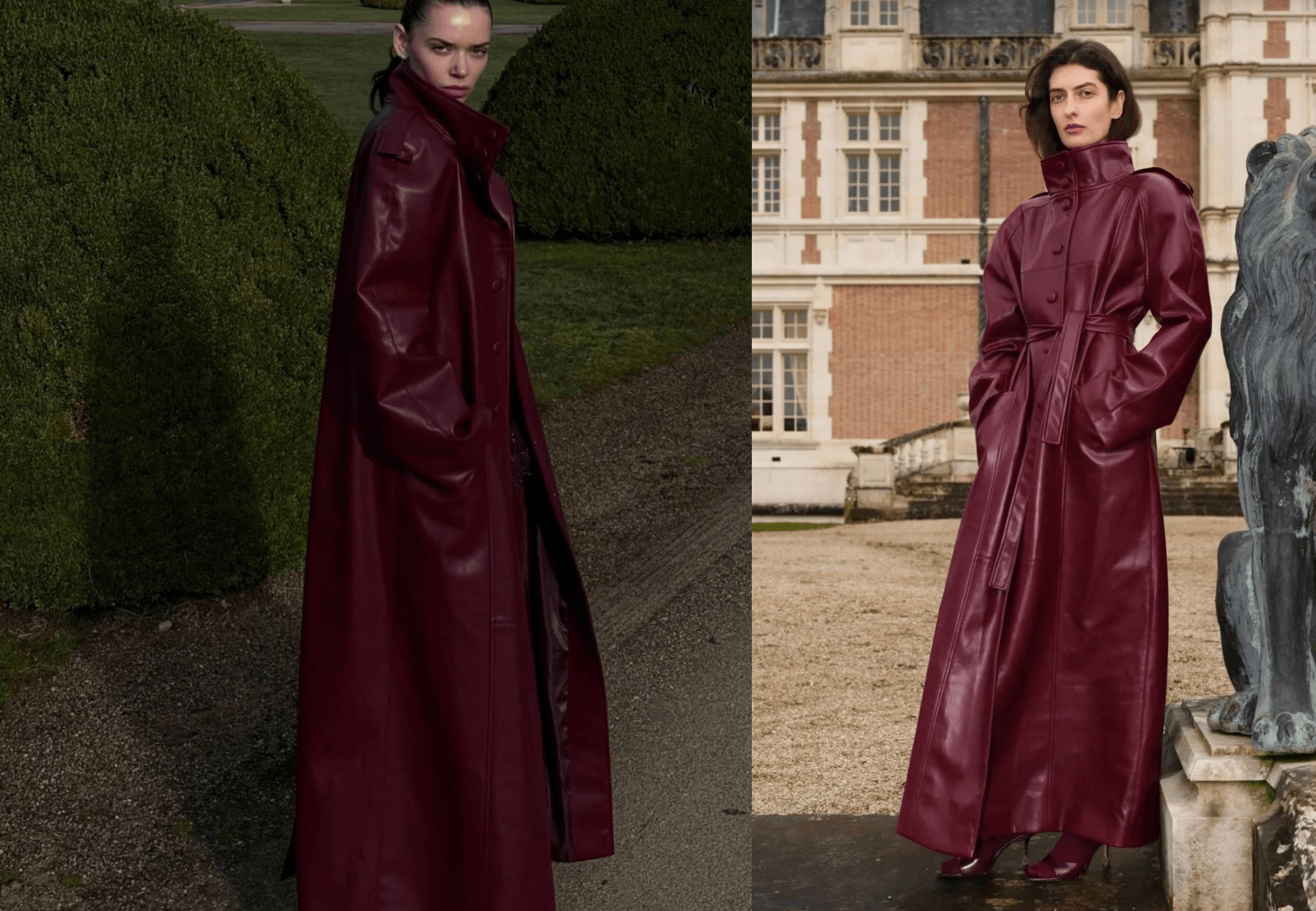
Long and maxi (to the ankle). The most striking and the most demanding. It replaces a coat, sets the whole silhouette, and becomes the absolute hero of the look. Shorter women often avoid maxi length, but it suits them too — provided the bottom isn't voluminous and there are no contrasting horizontal accents. ⠀ ⠀
 ⠀
⠀
⠀
⠀
A rule worth remembering: the hem of a trench coat shouldn't end at the widest point of the calf. Either above or below — otherwise the leg visually shortens regardless of height.
Color: why burgundy is more interesting than beige right now Classic beige is a safe choice, but that's exactly why it barely works as an accent: there are dozens of such trenches on the street, and they blend together. ⠀
Black is the most functional. It pairs with the entire palette, keeps things formal, doesn't look seasonal. This is the choice if you have only one trench and it needs to cover work, weekends, and evenings. ⠀
Burgundy is that rare case where a rich color behaves like a neutral. It's dark enough not to conflict with the rest of the wardrobe, and at the same time it immediately reads as a deliberate choice, not as "just threw something on." ⠀
Three pairings where burgundy works best: ⠀
burgundy + gray — the most expensive combination of all, cool gray tames the warmth of burgundy and leaves only depth burgundy + cream or camel — a soft, "not urban" pair, looks good with knitwear burgundy + black — strict and graphic, but needs a third texture, otherwise it looks flat ⠀ ⠀
What to avoid: burgundy with brown (the colors cancel each other out). Material: fabric or leather (faux leather) A classic gabardine trench is light, works for about two months a year, ideal for the in-between seasons. ⠀ ⠀
Leather lasts longer: from September to December and again in March, because leather doesn't let wind through. Its second advantage is that it's self-sufficient. Under a cotton trench, the look needs to be "finished off" with accessories; under a leather one, a gray sweater and straight jeans are enough. ⠀ ⠀
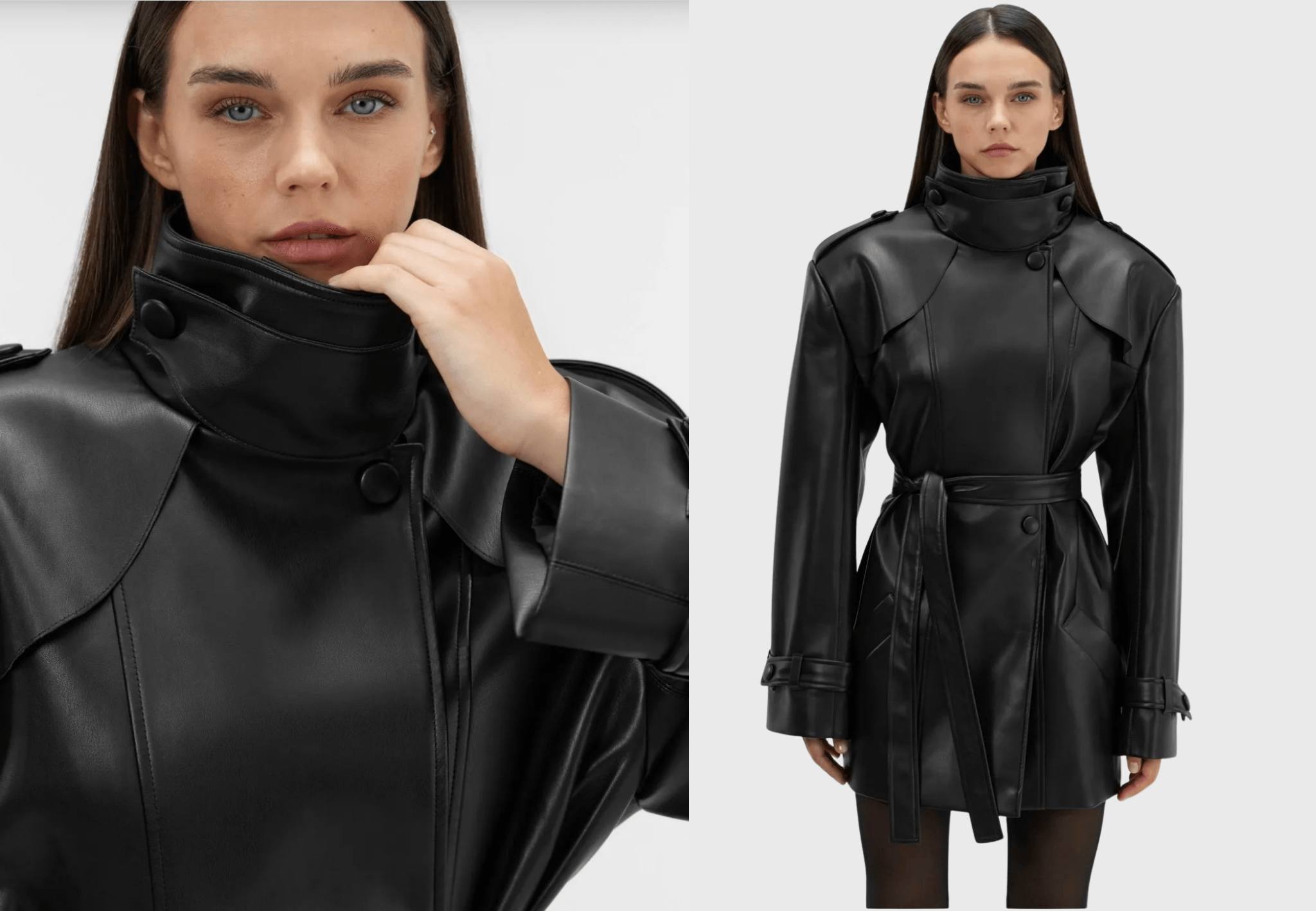 ⠀
⠀
⠀
⠀
If leather appeals to you but the trench silhouette doesn't, there's a third way: a leather coat. It's stricter in cut, without a belt or epaulettes, and works as an investment piece for many seasons. ⠀ ⠀
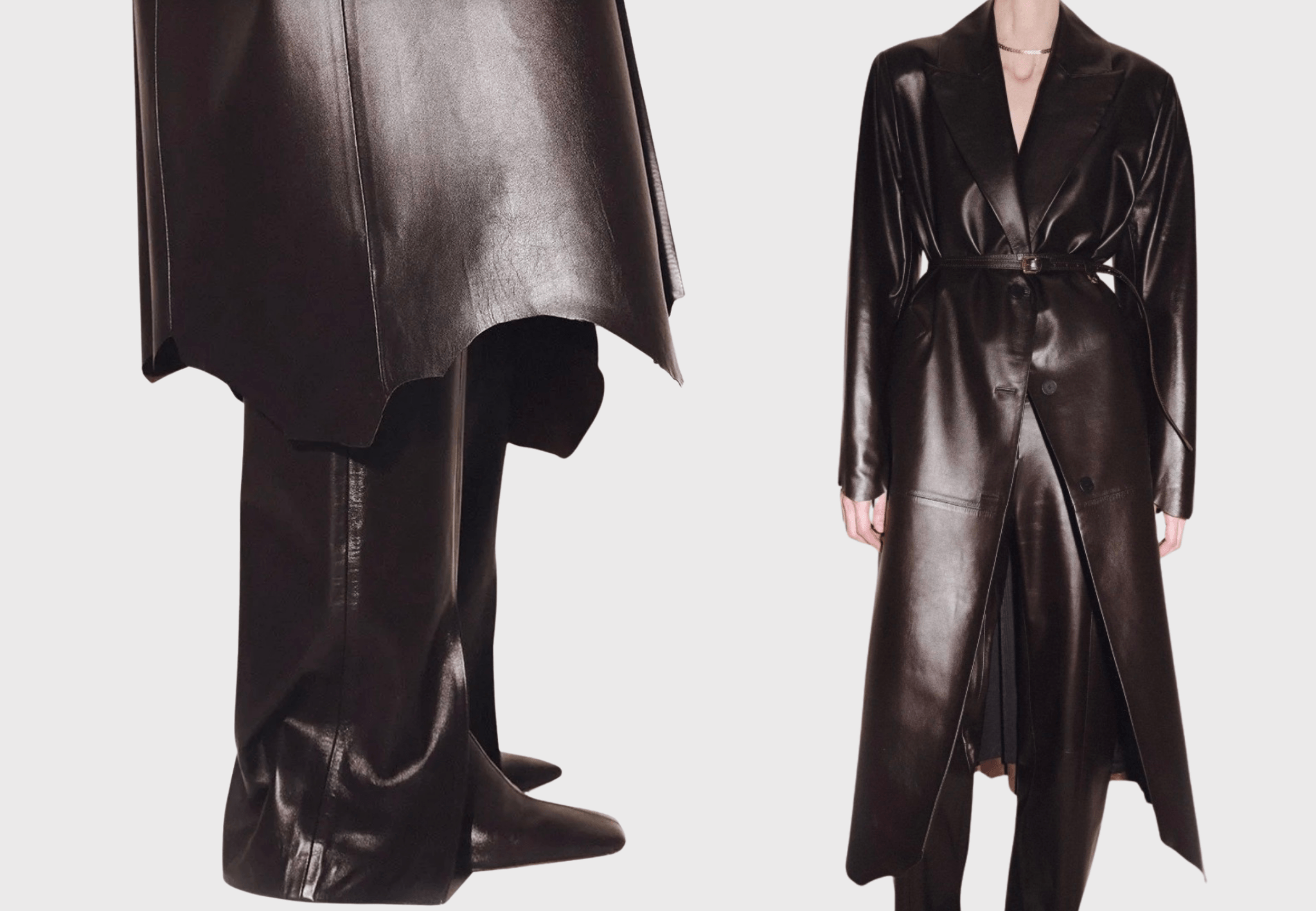 ⠀
⠀
Eight looks from stylists:
⠀
1. Base: straight jeans + knitwear
Straight or slightly wide mid-rise jeans, a solid-color sweater, loafers or Chelsea boots. Three colors maximum.
⠀
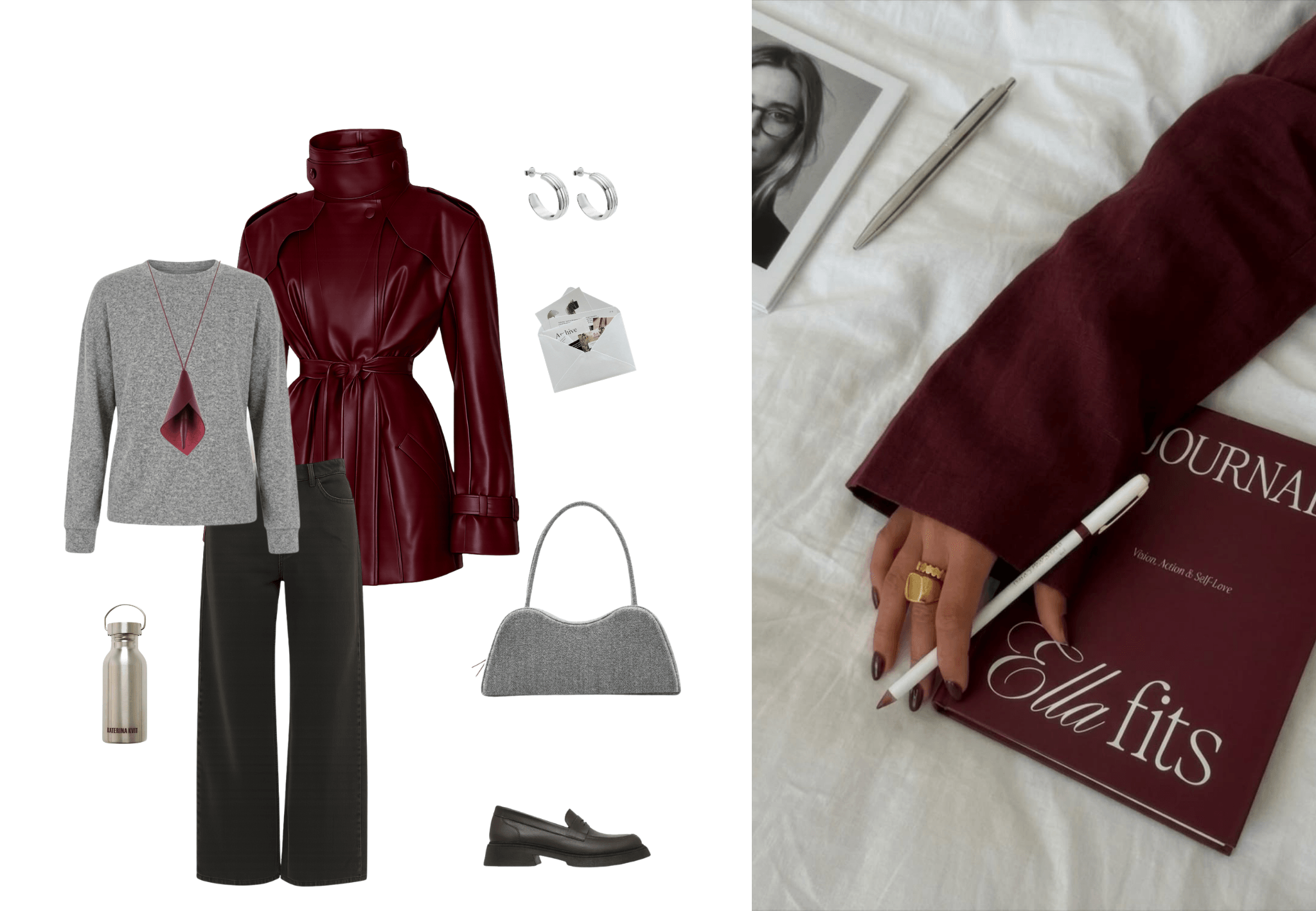 ⠀
Formula: trench coat + denim + matte knitwear = contrast of textures without conflict. Don't do: skinny jeans. A straight trench over a narrow bottom creates a triangle silhouette.
⠀
Formula: trench coat + denim + matte knitwear = contrast of textures without conflict. Don't do: skinny jeans. A straight trench over a narrow bottom creates a triangle silhouette.
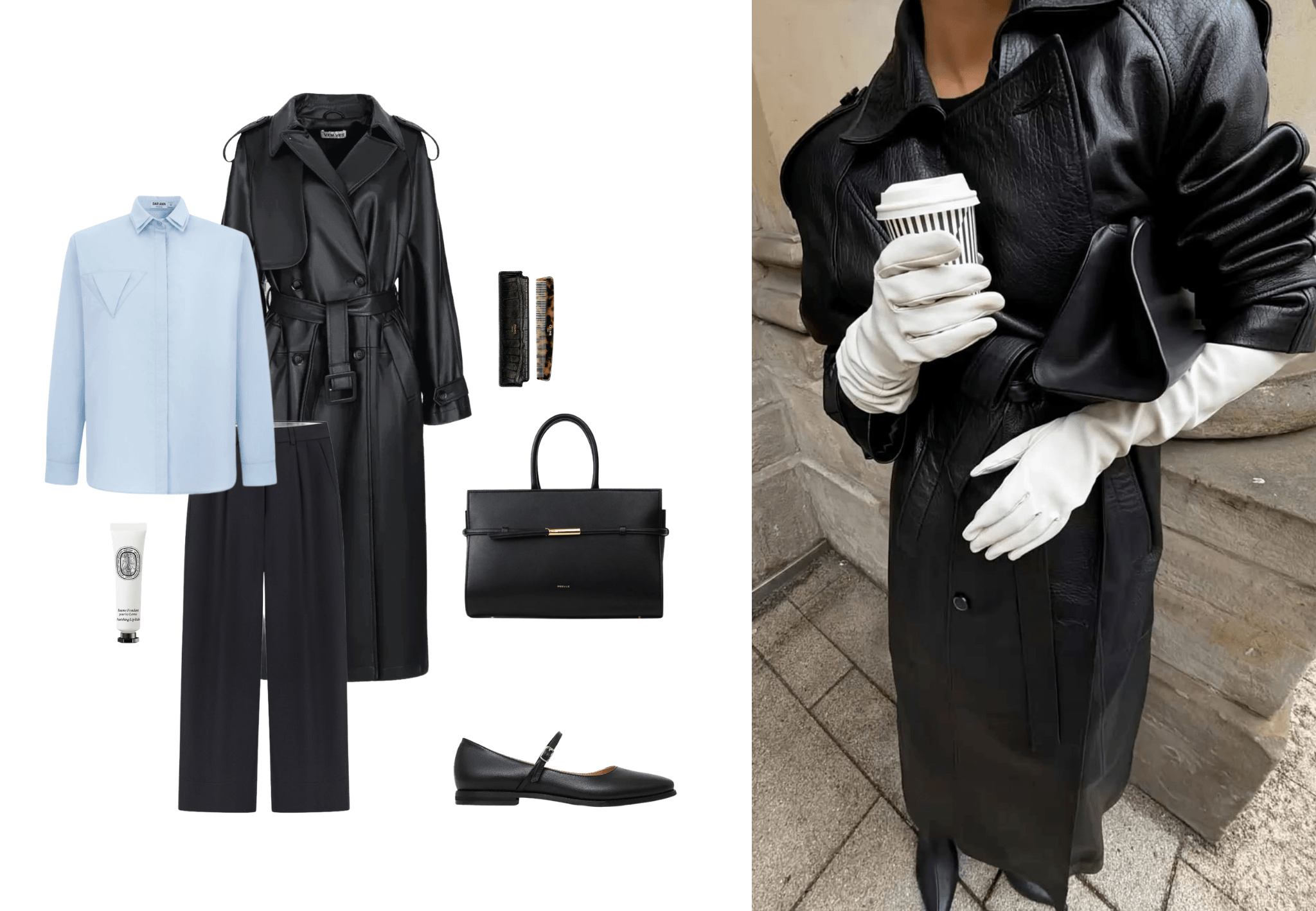
2. Office: tailored trousers + shirt⠀ ⠀
Trousers with a crease, a cotton shirt or a thin turtleneck, pumps or minimalist boots. ⠀
The detail that decides everything: the belt. Tied in a knot — accented, but also relaxed. Buckled — formal, almost uniform-like. For an office with a dress code, the buckle works best; for a creative environment, the knot.⠀ ⠀
3. Evening: satin dress + boots⠀ ⠀
A midi dress in satin or silk, the trench worn open, heeled boots. ⠀
Formula: satin's sheen + the trench's matte fabric = a depth that neither element gives on its own. Proportions: the dress hem should be 10–15 cm longer or shorter than the trench. The same length cuts the silhouette in half.⠀⠀
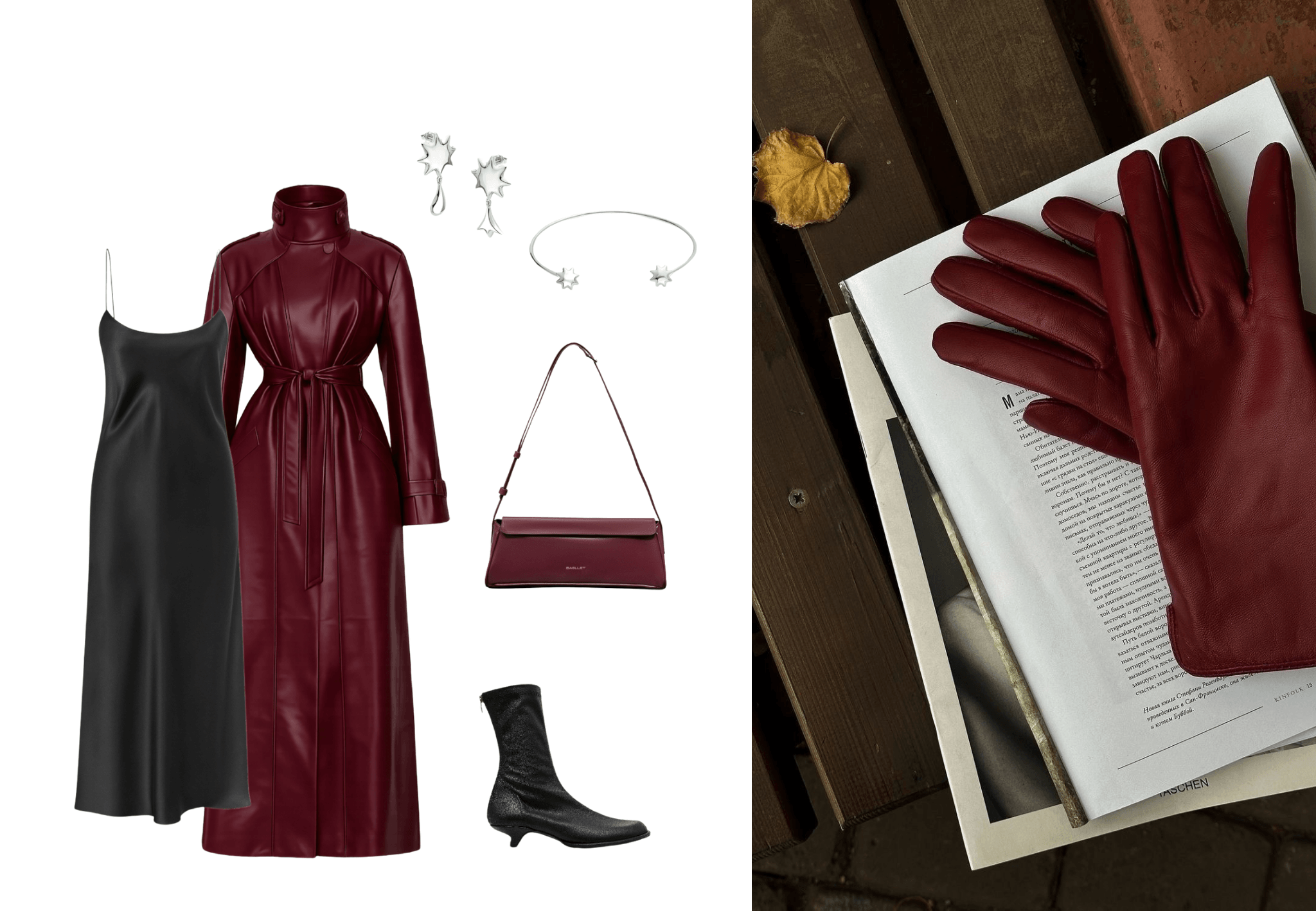
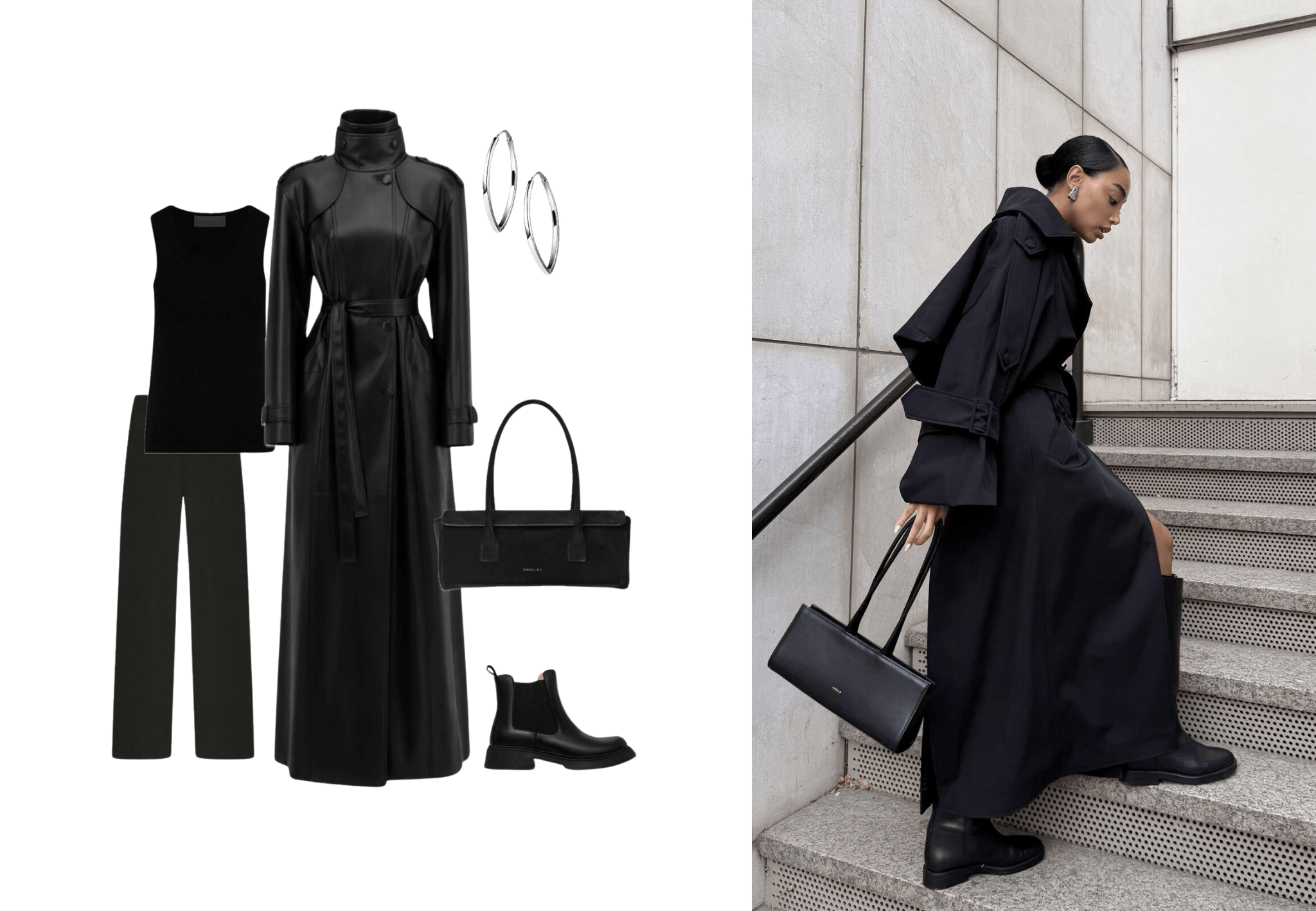
4. Total black: three textures⠀ ⠀
A fully black look doesn't look boring if it includes at least three different textures: the trench's smooth leather + dense wool knitwear + suede boots. ⠀ ⠀
Add the accent with metal, not color: silver earrings, a thin chain, a belt buckle. ⠀
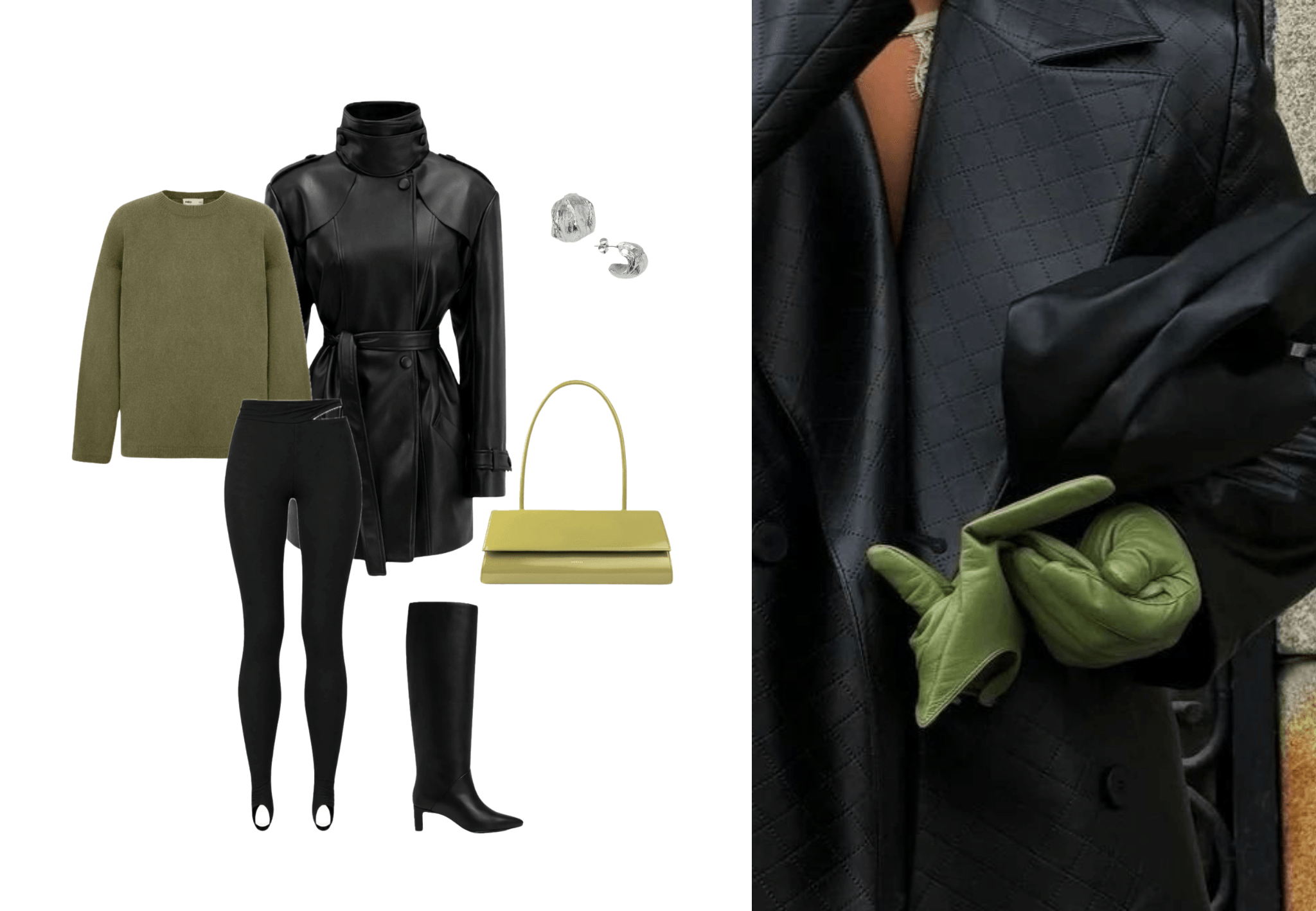
5. Leather trench + leggings: playing with proportions ⠀ ⠀
We pair a black leather trench with stirrup leggings and tall boots — the result is a clean, urban look with a defined silhouette. An olive sweater and a light green bag soften the total black and add a touch of color. Tip: stirrup leggings visually elongate the legs, and tall boots continue the vertical line. It's better to leave the sweater loose — this keeps the balance between the fitted bottom and the more voluminous top. ⠀
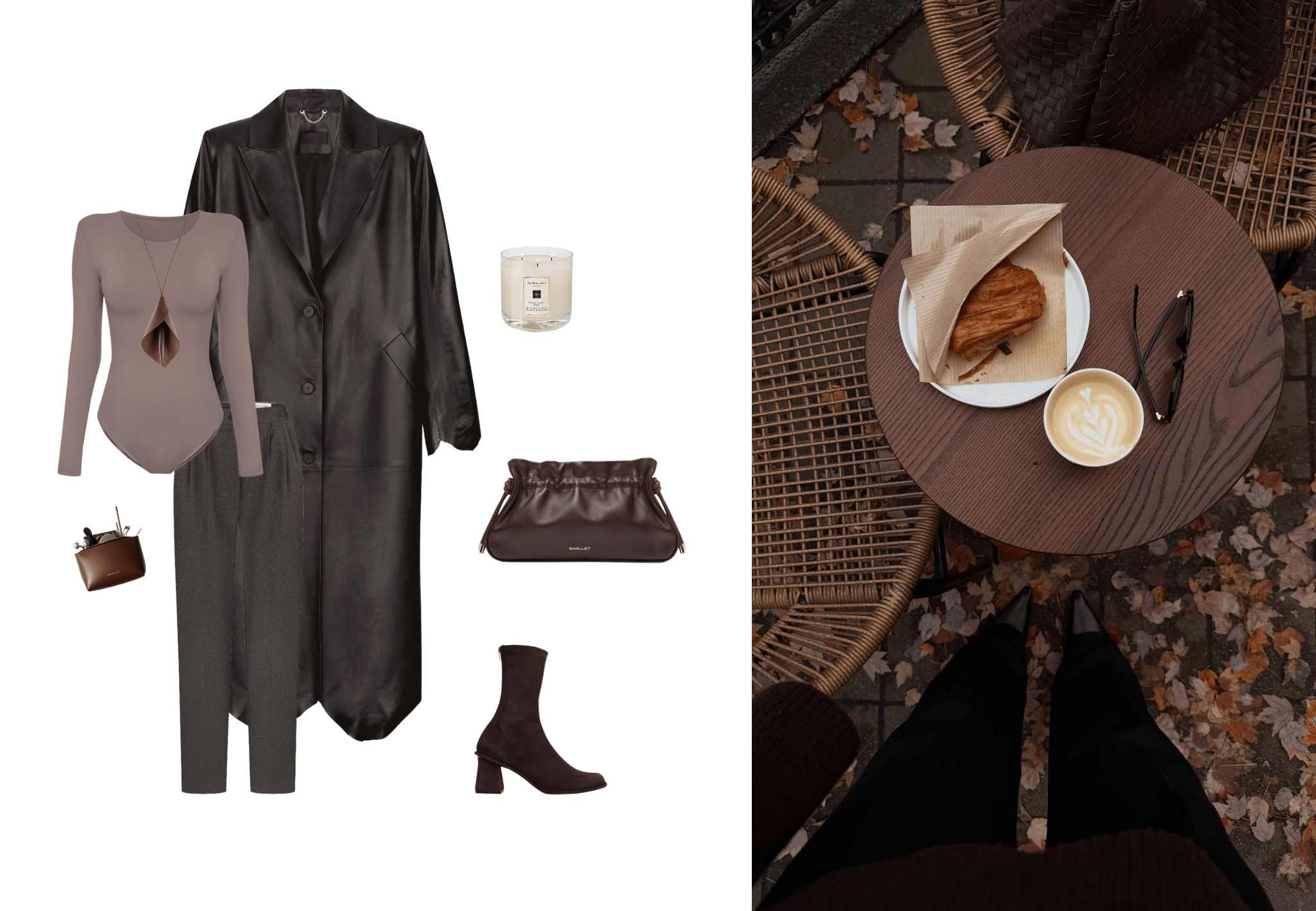
6. Leather trench + tailored trousers: soft minimalism ⠀ ⠀
A long leather trench, straight tailored trousers, and a bodysuit create a restrained yet feminine look. Chocolate and taupe tones make it softer than classic total black, while suede ankle boots add texture. Tip: combine close shades within one look, but vary the textures — smooth leather, matte suiting fabric, and suede create depth even without bright color accents. ⠀
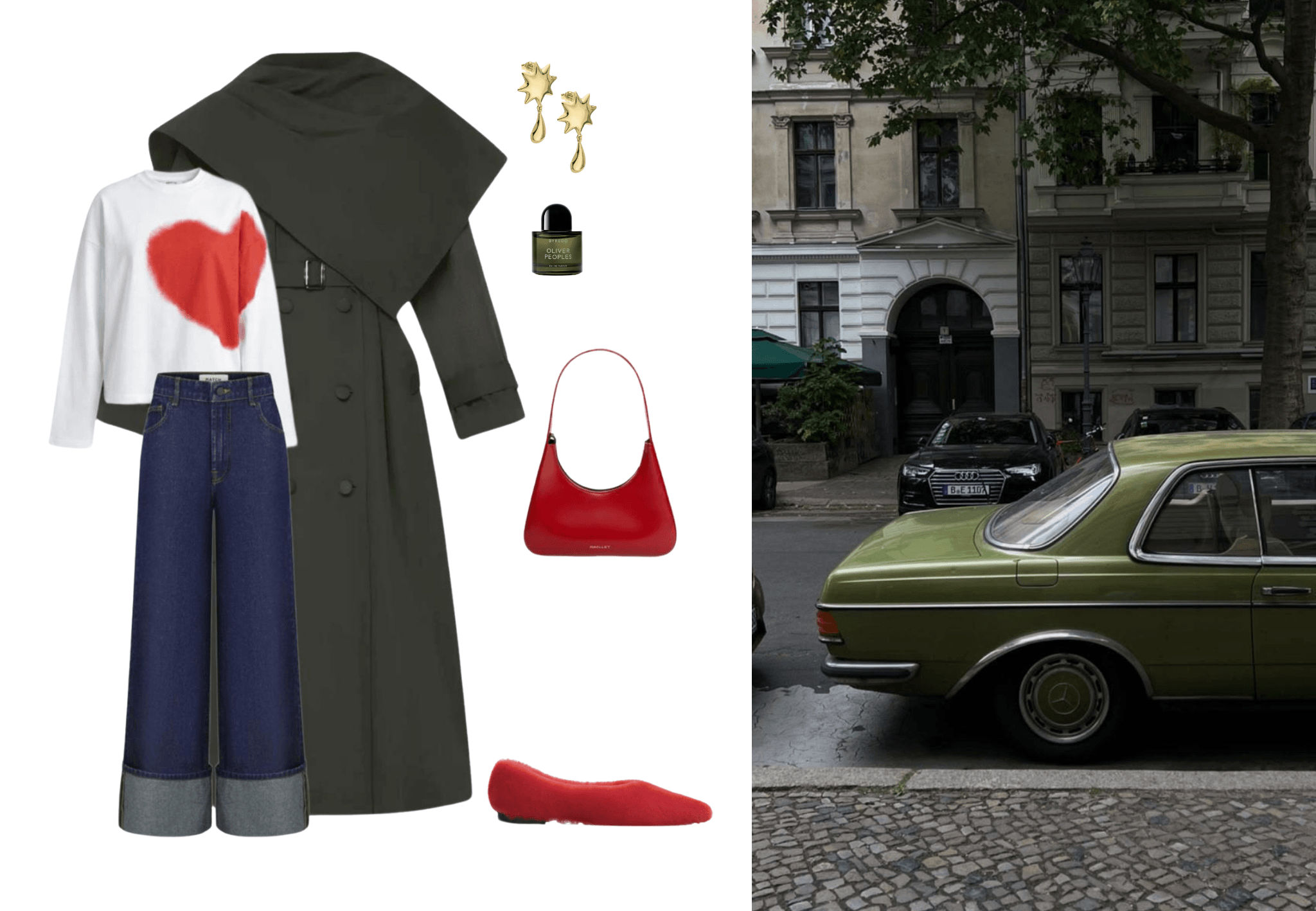
7. Khaki + red: an accent color ⠀ ⠀
A deep khaki trench, dark denim, and a white top create a calm base against which red works especially vividly. The bag and shoes can echo one accent color — the look stays cohesive rather than overloaded. Tip: if a piece already has a bright detail, like a red heart on a long-sleeve top, repeat that shade in 1–2 more accessories. That way the color reads as a deliberate styling move rather than a coincidence. ⠀
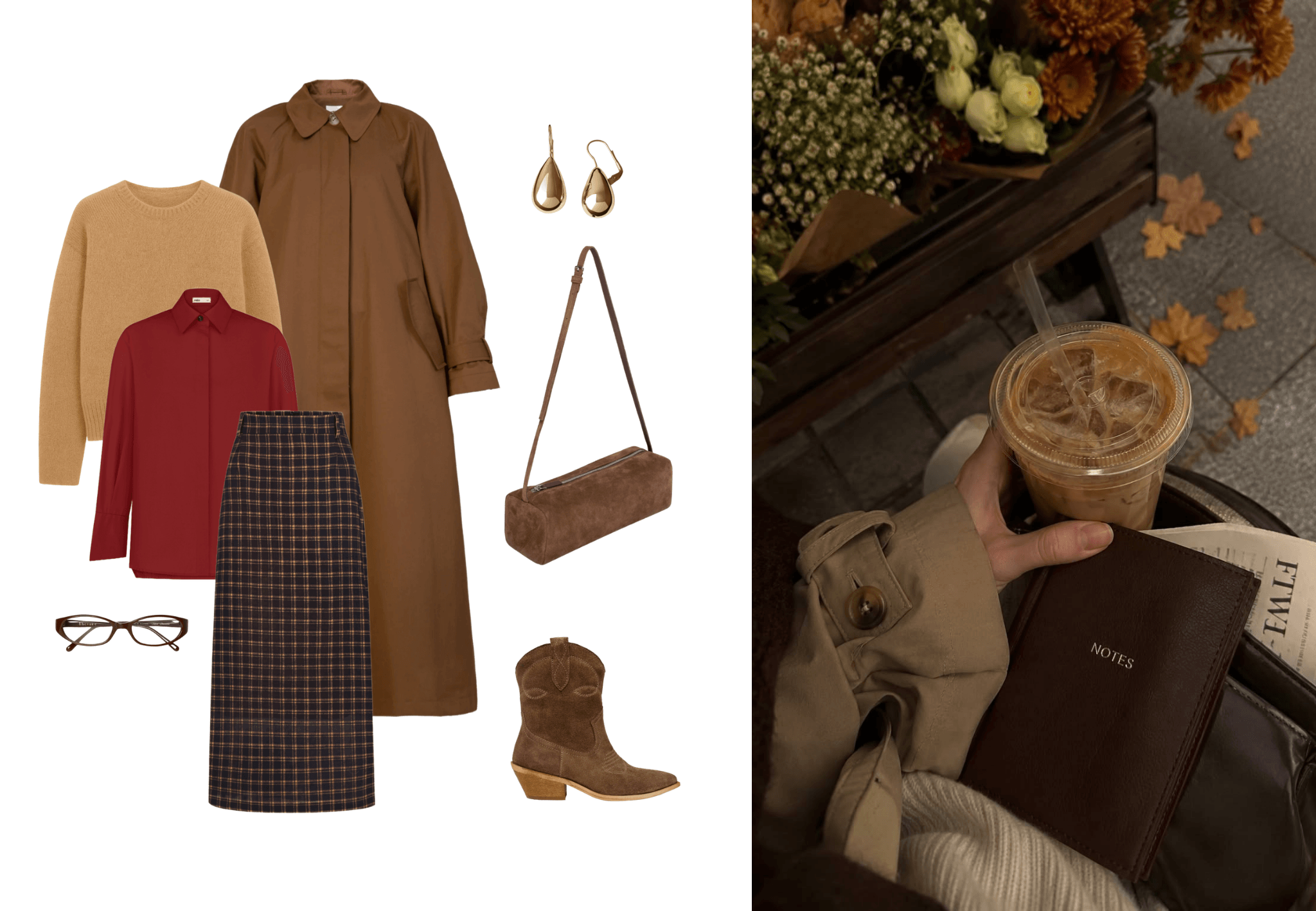
8. Plaid + trench: autumn layering ⠀ ⠀
A classic trench pairs easily with a plaid skirt, a shirt, and thin knitwear. Different shades of brown tie the print, the suede, and the outerwear into one warm palette, while red gives the look character. Tip: in a layered look, you don't need to wear everything at once. The sweater can be draped over the shirt or over the shoulders, leaving the red shirt as the main color accent.⠀
What people usually don't write about⠀ ⠀ ⠀⠀ ⠀
⠀ Why trench coats are often ONE SIZE ⠀
All six models above are ONE SIZE, and that's not a coincidence. A trench coat is constructionally designed for a loose fit: it needs to accommodate a layer of clothing underneath, and the waist is shaped by the belt, not by darts. That's why many Ukrainian designer brands make it in a single size.
What this means in practice:
Go by the garment's measurements, not your usual size. The chest width on a loose trench is usually 15–25 cm larger than your bust measurement — that's normal and built into the cut. Account for the layer underneath. A trench tried on over a T-shirt will fit differently than over a sweater. If you plan to wear it in winter, check whether there's still room in the armhole. Sleeve length matters more than width. A belt and a rolled-up sleeve can save the width, but a too-short sleeve saves nothing. The most critical parameter for shorter women is the overall length of the garment. It's worth checking against the distance from the shoulder to the desired point on the leg.
If you're unsure — message us, and we'll check the measurements of the specific model against yours before you place your order. ⠀ ⠀ ⠀
Three mistakes that leave a trench coat hanging in the closet ⠀ ⠀ ⠀ ⠀
1.Leather on leather. A leather trench + leather pants + leather boots + leather bag = a look with no air. Two items maximum, and it's best if one of them is small. 2.Too many accents. A trench coat is already an accent, and burgundy or leather is a double accent. A bright bag, a print, and chunky jewelry all at once compete with it. Choose just one. 3.Unbuttoned and untied. A trench coat that simply hangs open with no work done on the belt loses its silhouette. Either tie it, tuck the belt into the loops, or button it up — but don't leave the ends hanging.⠀ ⠀ ⠀ ⠀
Care ⠀ ⠀ ⠀
Don't dry leather near a radiator — it deforms and cracks. Store it on wide hangers, not on a hook: a hook breaks the shoulder line. Don't pack it in plastic; it needs a fabric garment bag. Remove stains from leather with a damp cloth right away, without soap or solvents.
Frequently asked questions ⠀ ⠀
-What's the most versatile trench length? Midi — below the knee, but above the middle of the calf. It works with jeans, with a dress, and in the office.
-Can you wear a trench coat in winter? A leather one — yes, down to about −5 °C with a warm layer underneath. A fabric trench in winter only works as a middle layer in a layered look.
-Is a burgundy trench practical? Yes. Burgundy is dark enough to behave like a neutral, and it pairs with gray, cream, black, and denim.
-Does a trench coat suit shorter women? Yes, including maxi length. What matters isn't the length itself, but a narrow bottom and the absence of a contrasting horizontal line at the waist.
-How do I know if ONE SIZE will fit me? Check the garment's measurements against your own, rather than going by your usual size. The critical parameters are sleeve length and overall length. ⠀ ⠀
Not sure it'll suit you? ⠀ ⠀ ⠀
Message our stylists on Telegram — we'll help you find a trench coat based on your height, body type, and what's already in your wardrobe, and check the measurements before you order. Free of charge.
Share this post