All articles
Trends
FROM CRISIS TO ESCAPISM: 5 GLOBAL SHIFTS SHAPING FASHION IN 2026
Today fashion responds to economic shifts, political changes, and cultural moods faster than analytical reports. In this article, stylist and art historian Anna Archewska explores five processes that will shape fashion in 2026 — from intelligent consumption and fatigue with digital perfection to escapism, a new conservatism, and the global decentralization of style.
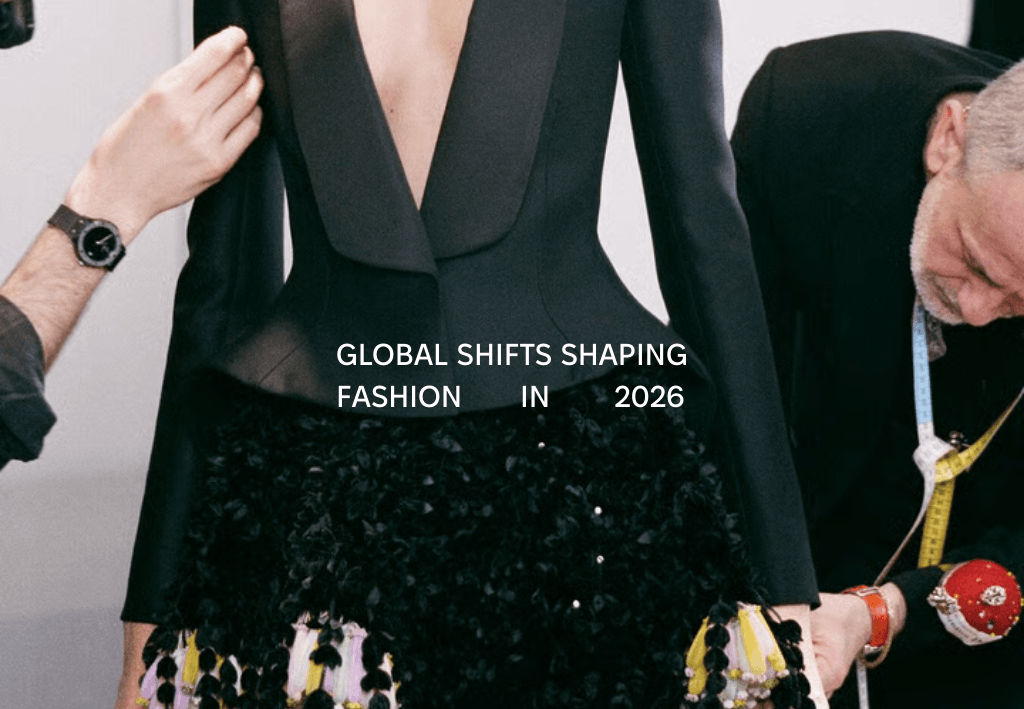
Fashion has long ceased to be about skirt lengths or the random “color of the season” — today, it is one of the most sensitive barometers of society. It speaks to our fears, hidden hopes, and global economic shifts much more sincerely and quickly than the evening news or analyst reports.
Starting in 2026, we will finally say goodbye to the era of dictated trends. Fashion is becoming inclusive in its meanings and eclectic in its forms. Let's take a look at the five global ideas that will shape our wardrobes in the coming years and why “just a dress” is actually a manifesto.
01. LESS IS MORE
Global price increases and the world economic crisis have transformed our attitude towards things: the fast fashion model — “buy often and buy a lot” — has finally exhausted itself, giving way to intelligent consumption — second hand, resale, and vintage. According to McKinsey reports, 60% of shoppers are looking for ways to save money, and second-hand goods are growing in popularity 2–3 times faster than the traditional market.
We are seeing a shift from the culture of “owning new” to the philosophy of “preserving what is valuable.” Popular aesthetics such as Frugal Chic, Quiet Luxury, and Old Money are not about playing at being rich, but about the unquestionable priority of quality over quantity: no flashy logos, styles and colors that have been proven over decades and will not lose their relevance in six months.
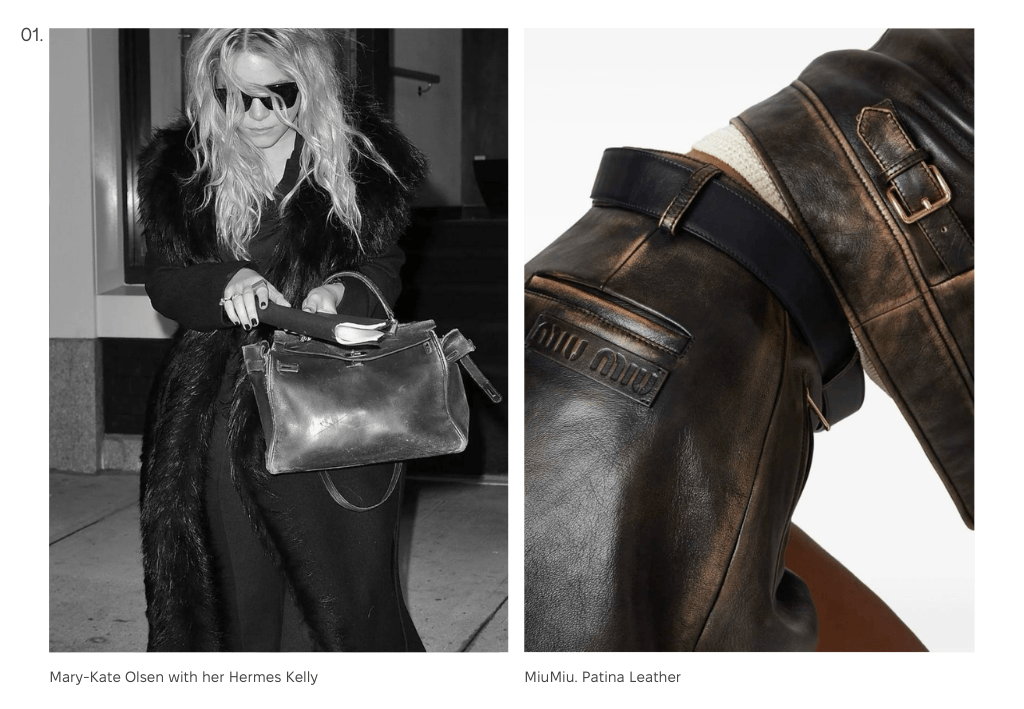
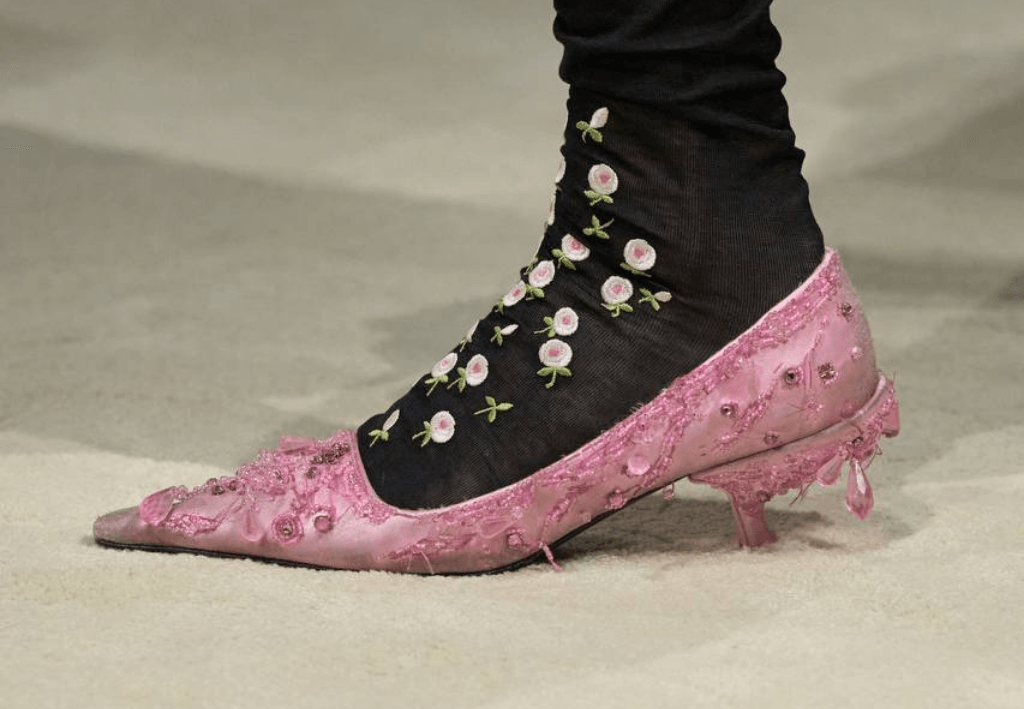
Today, an item is seen as an investment that must stand the test of time. Even luxury brands deliberately add signs of “wear” to their accessories (01.): a barely noticeable patina or soft scuffs on leather are now valued more than the sterile shine of newness, as they testify to the history and longevity of the relationship with the item.
02. DIGITALIZATION FATIGUE
In a narrower sense, it is a protest against the perfection and plasticity of AI; in a broader sense, it is fatigue with digitalization in general.
In a world where artificial intelligence can generate a perfect image in a second, there is an acute shortage of the living, the random, and the imperfect. The industry is moving away from idealization and embracing a living, organic appearance as the new standard of beauty.
This is a return to the natural geometry of the face: an “imperfect” nose with a hump, thin lips, unfiltered skin texture, rejection of fillers, and acceptance of age.
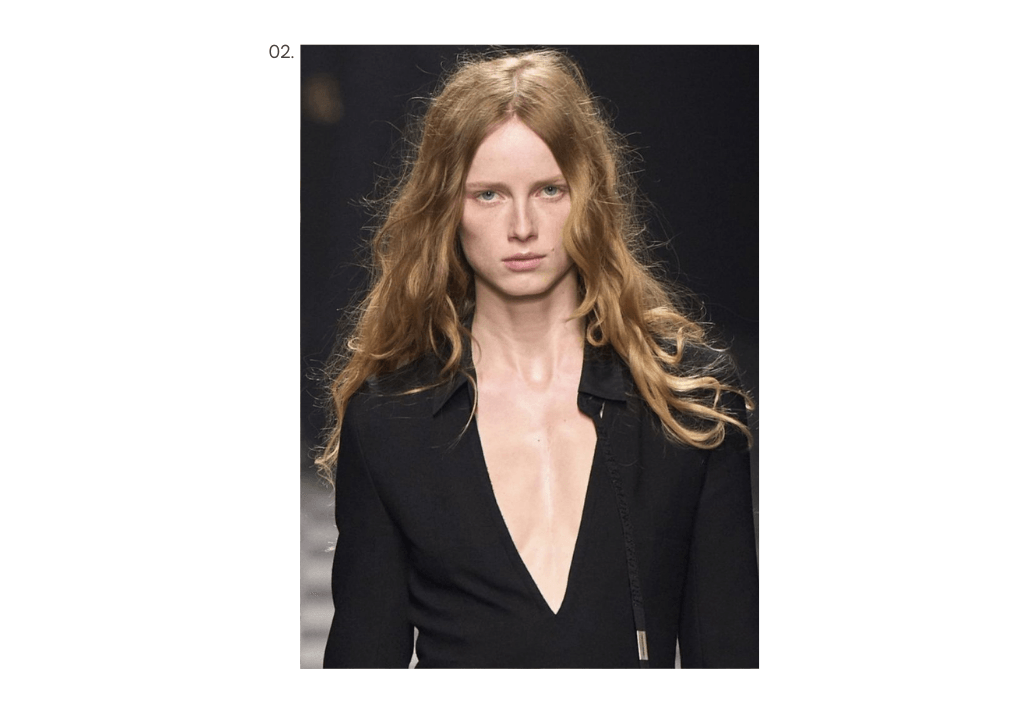
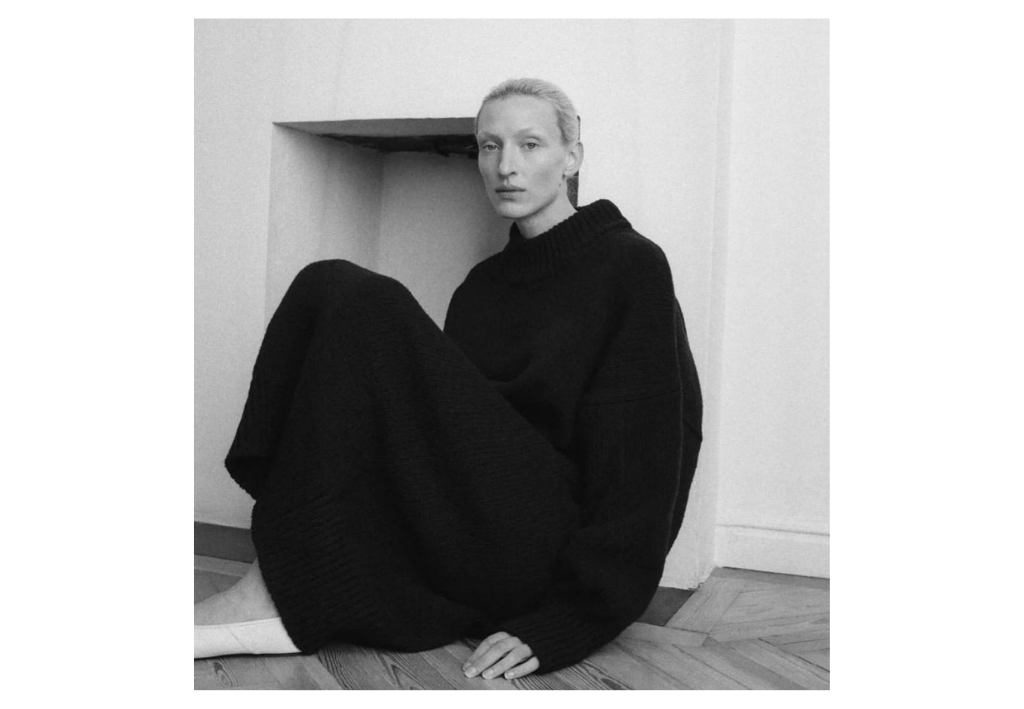
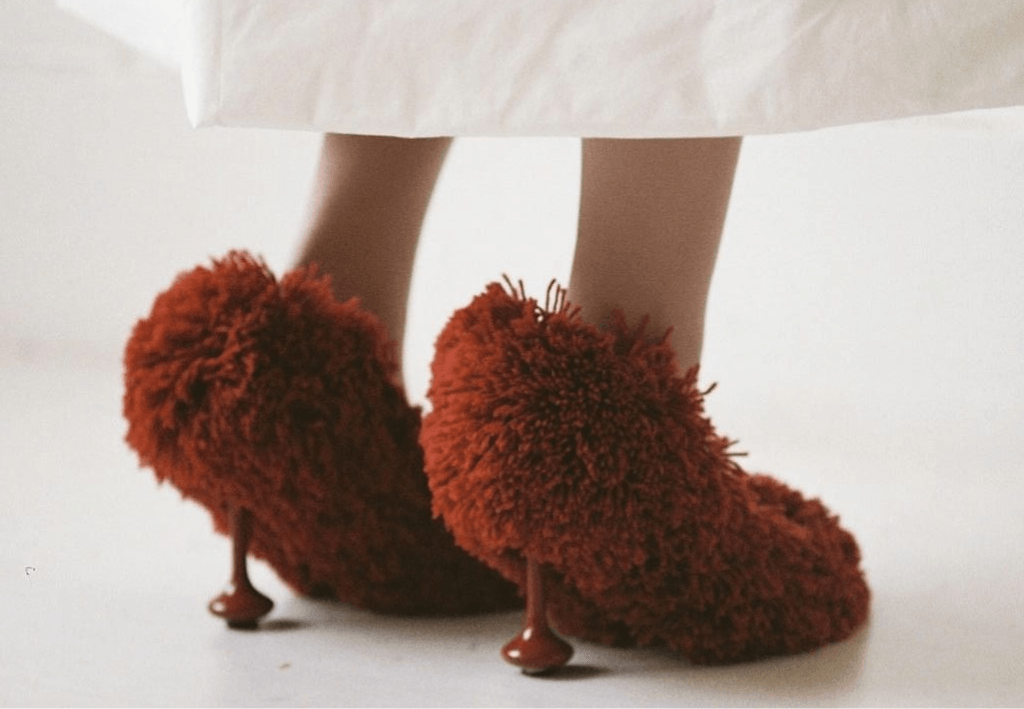
This trend toward “authenticity” has instantly resonated in clothing through the rise of craft and slow fashion. There is a growing demand for items that show the hand of the craftsman: rough knitting, uneven edges, authentic embroidery, or items created as one-of-a-kind pieces to individual orders (02.).
Even the visual language of brands is changing—aggressive 3D rendering is being replaced by hand-drawn animation and “film” frames.
03. ESCAPISM
In times of crisis and instability, fashion always looks back—the past seems predictable and safe.
Political instability breeds escapism — the desire to flee to a place that was understandable and beautiful, an attempt to close one's eyes to the gray everyday life through conscious excess and maximalism.
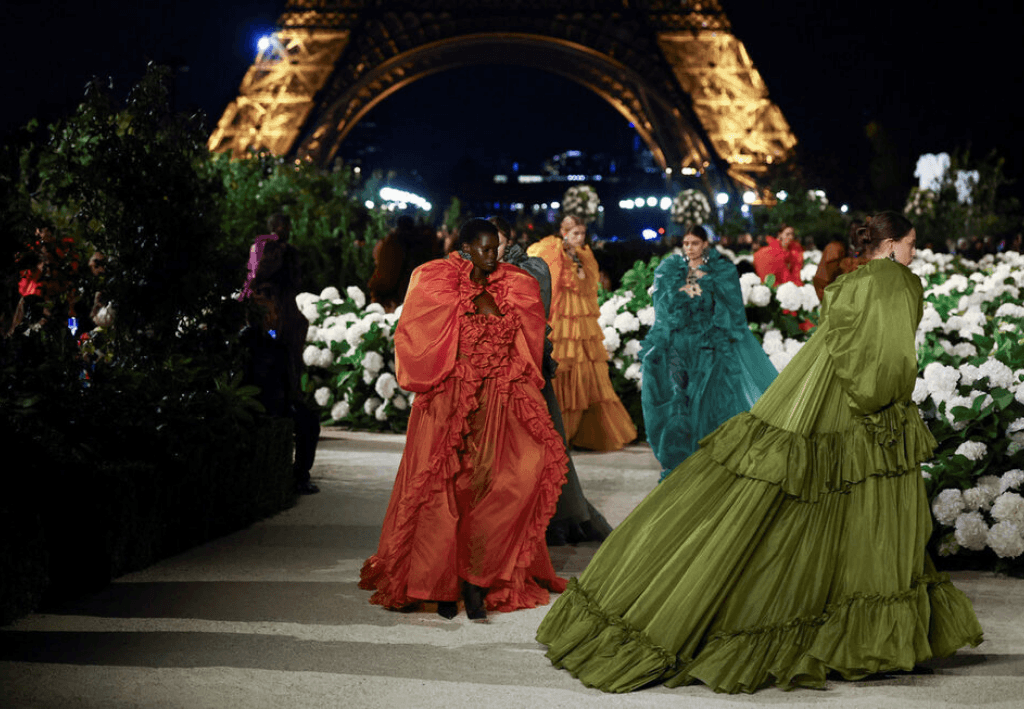
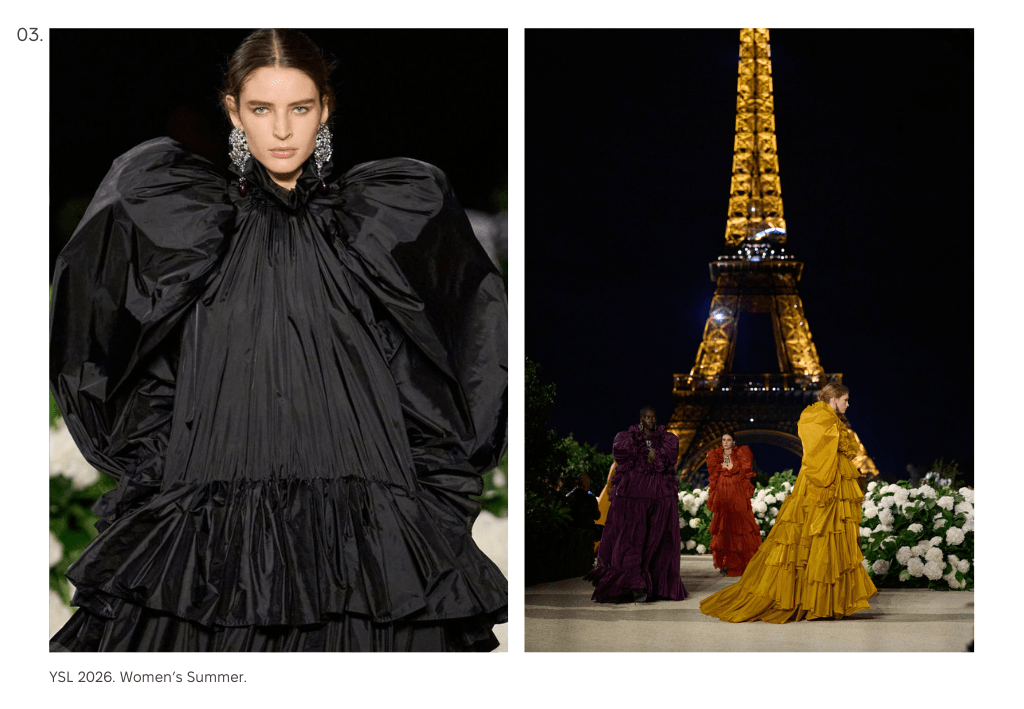
That is why we see the triumphant return of aristocracy on the catwalks: neo-romantic corsets, Victorian silhouettes (03.) reminiscent of the Brontë sisters' novels, and the frenzied glamour of The Great Gatsby era (03.).
Socializing, theater culture, and high society parties are being revived as a form of group therapy. Sequins, feathers, and elegance in 2026 are not about frivolity, but about resistance to the depressive backdrop.
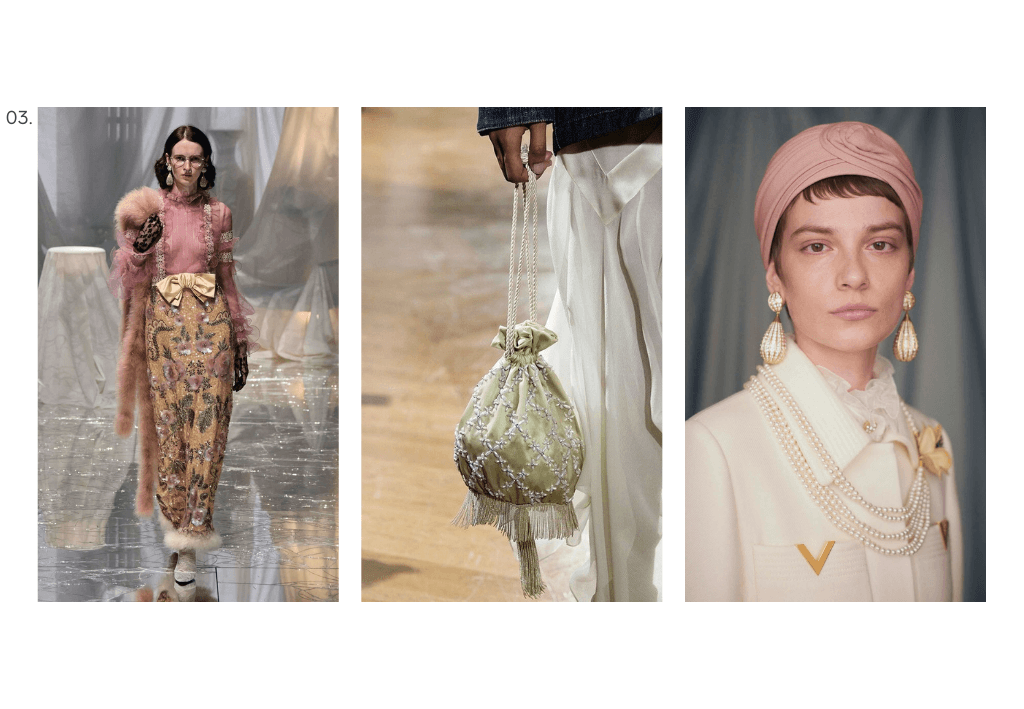
This is a modern interpretation of the “red lipstick effect” from World War II: we dress up not because we are happy, but to remind ourselves that every day of life is worth celebrating.
04. CONSERVATIVE TURN
The global political vector, which has shifted to the right, was instantly reflected in the lines of the cut.
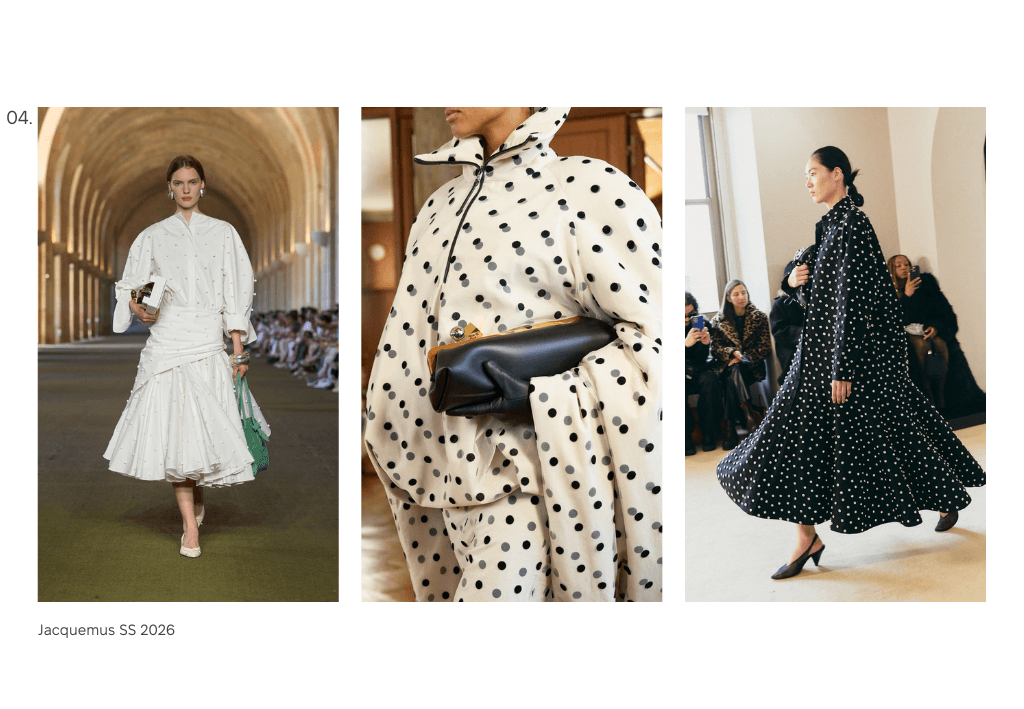
After the long reign of shapeless oversize, we are returning to clear, structured silhouettes. This is not about restricting freedoms, but about finding inner order through outer form.
Traditional femininity is returning in the lady-like format (04.) of the 1950s, but now it is endowed with a steely character. Accentuated waists and impeccably tailored jackets are becoming the new uniform for women who run corporations and states.
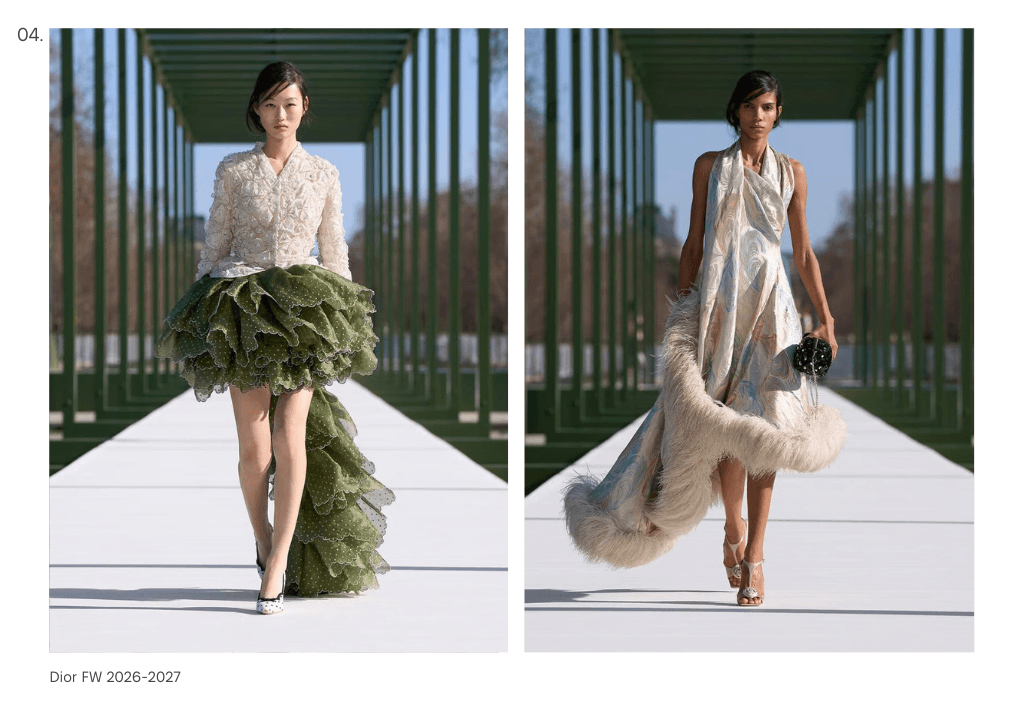
This is the fashion of confidence, where elegance is used as a tool of influence and conservative tailoring serves as a symbol of stability in a changing world.
05. DECENTRALIZATION
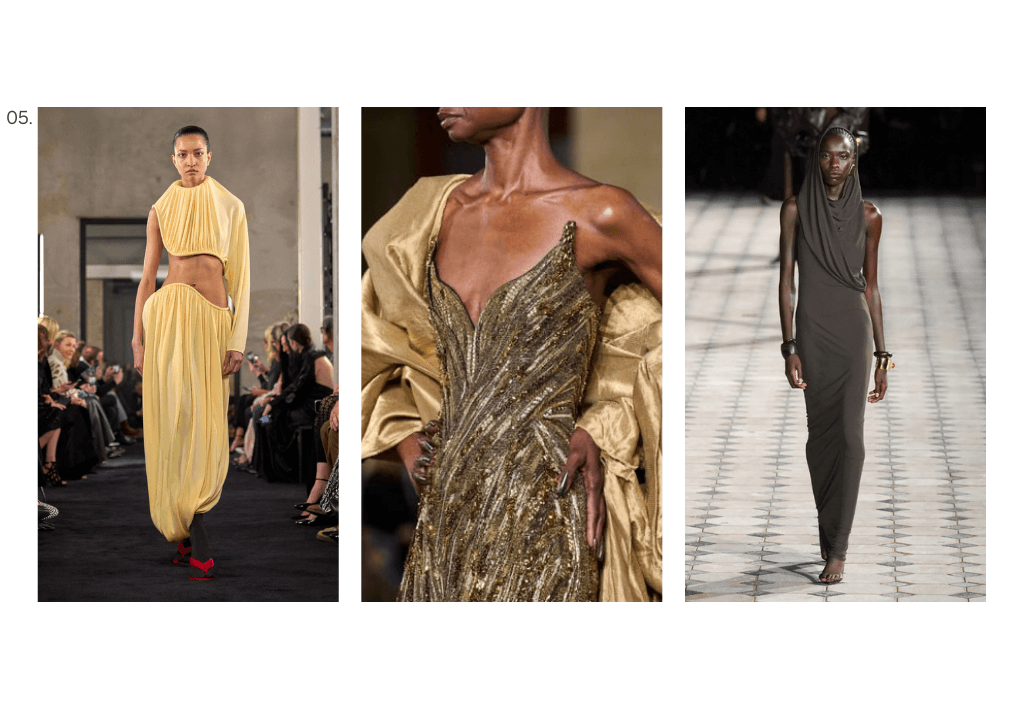
The Eurocentric world is falling apart. The fashion spotlight is shifting to Africa, the Middle East, and Asia, not as “exotic” destinations, but as new thought leaders.
Paris and Milan remain venues for presentations, but ideas are now born in Lagos, Seoul, Riyadh, and Mumbai.
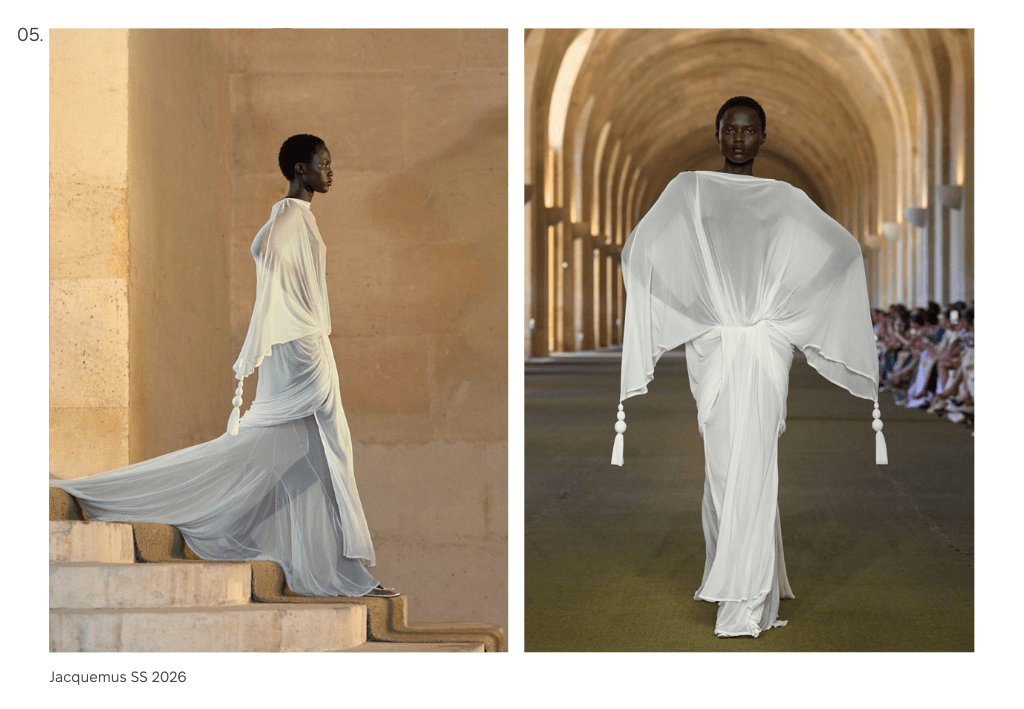
This has brought a completely different aesthetic to the catwalks: complex drapery, bright ornaments with deep cultural roots, and silhouettes that ignore the usual Western canons.
Fashion in 2026 is becoming inclusive at the DNA level — it does not borrow “exoticism” but gives voice to new opinion leaders. It is an intellectual mix of traditions that makes contemporary style incredibly multifaceted and devoid of any boundaries.
Fashion in 2026 is a space where there are no longer universal rules, only your personal strategy.
Your wardrobe today is a manifesto: will you choose cozy vintage as a way to preserve memory, the harsh silhouette of new conservatism to conquer the heights, or perhaps become an ambassador of handmade craftsmanship in the world of algorithms?
Today, clothing is not about who others want to see you as, but who you dare to be yourself.
Share this post