All articles
Stylist tips
THE PHENOMENON OF CAROLYN BESSETT-KENNEDY: MINIMALISM AS A POSITION, NOT A TREND
On the occasion of the release of the American Love Story series, we turn to the phenomenon of Carolyn Bessette-Kennedy's style. Stylist Christina Dutchak analyzes Carolyn's “formula for looks”: the key items in her wardrobe, the architecture of her silhouettes, the principles of minimalism, and the repetition of forms. Separately, there is a practical section on who suits this aesthetic and how to adapt it taking into account proportions, contrast in appearance, and body type.
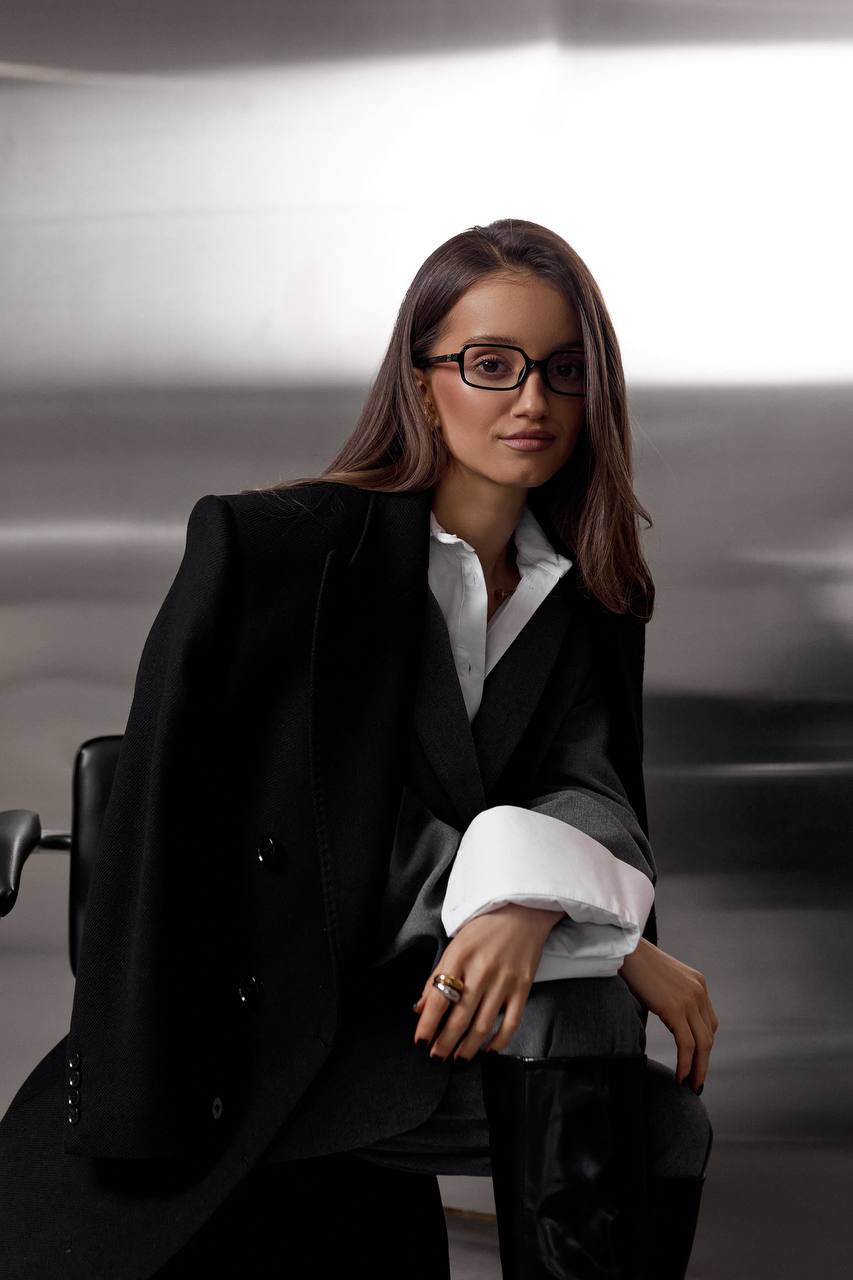
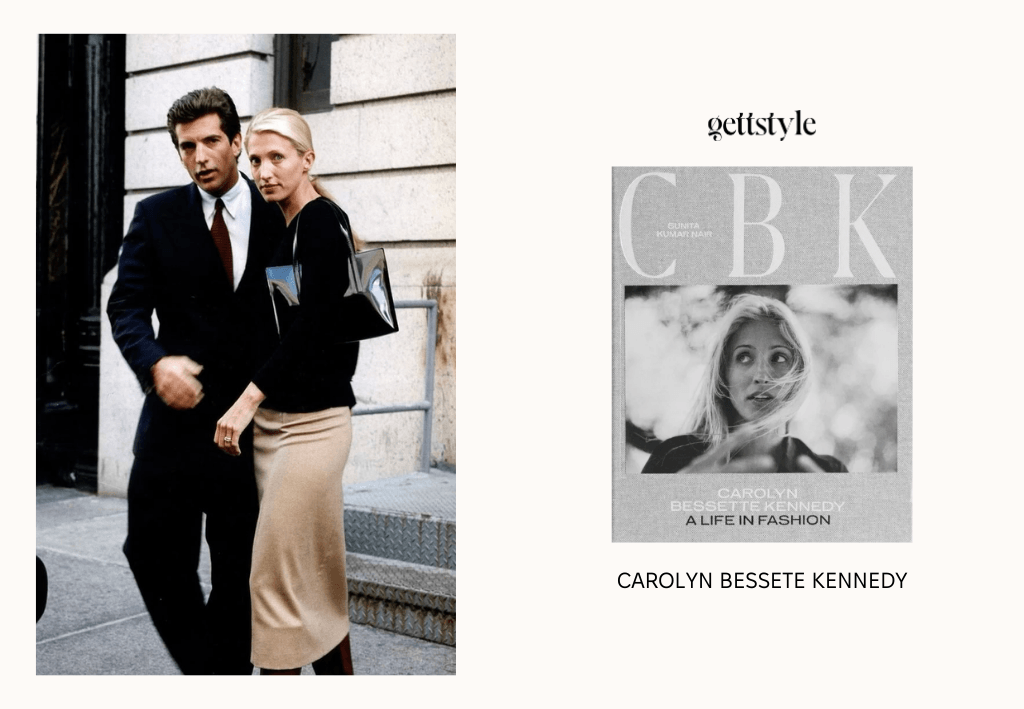
With the release of the series American Love Story, which revisits the story of Carolyn Bessette-Kennedy and John F. Kennedy Jr., her style has returned to the forefront of fashion discourse.
Her image became an archetype not because of a set of clothes, but because of the consistency of her stylistic identity. The phenomenon is not minimalism as a trend of the 90s, but minimalism as a position. In a decade of ostentatious luxury, logomania, and glossy sexuality, she chose the opposite strategy—restrained, intellectual, geometrically pure. Her style is architecture, not decor.
Key items in Carolyn's wardrobe:
· Straight knee-length coat
· Silk midi dresses
· The perfect white shirt
· Minimalist black turtlenecks, high-necked tops
· Laconic sandals, kitten heels, minimalist loafers, pointed and square toes
· Structured bags
· A minimum of jewelry and accessories
Translated with DeepL.com (free version)
These images were not accidental. Their minimalism and repetitiveness reflected Caroline's identity, her individuality and character. She almost never wore jewelry, even at her own wedding, and yet the image looked complete and well thought out.
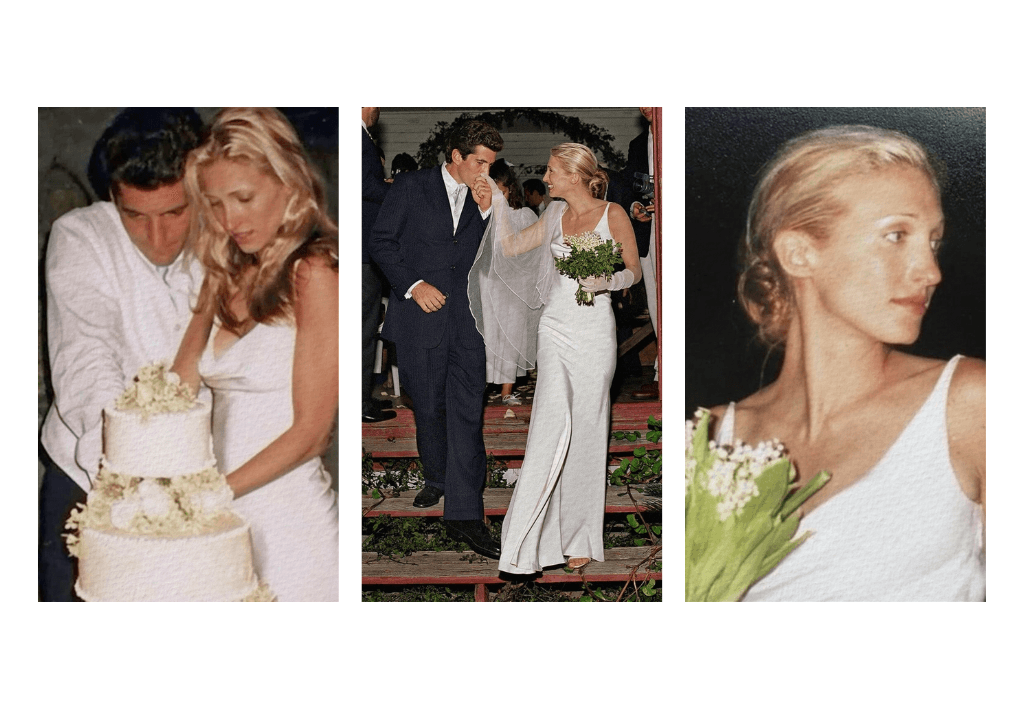
Characteristic silhouettes:
· elongated vertical
· straight or slightly fitted cut
· minimal decoration
· emphasis on the shoulder and neck lines
Even when she chose items with floral or animal prints, the structure of the look remained unchanged. The minimalism was supported by architectural bags, minimalist shoes with a slight dramatic touch, and a restrained hairstyle. The print served as an accent without disrupting the clean construction of the silhouette.
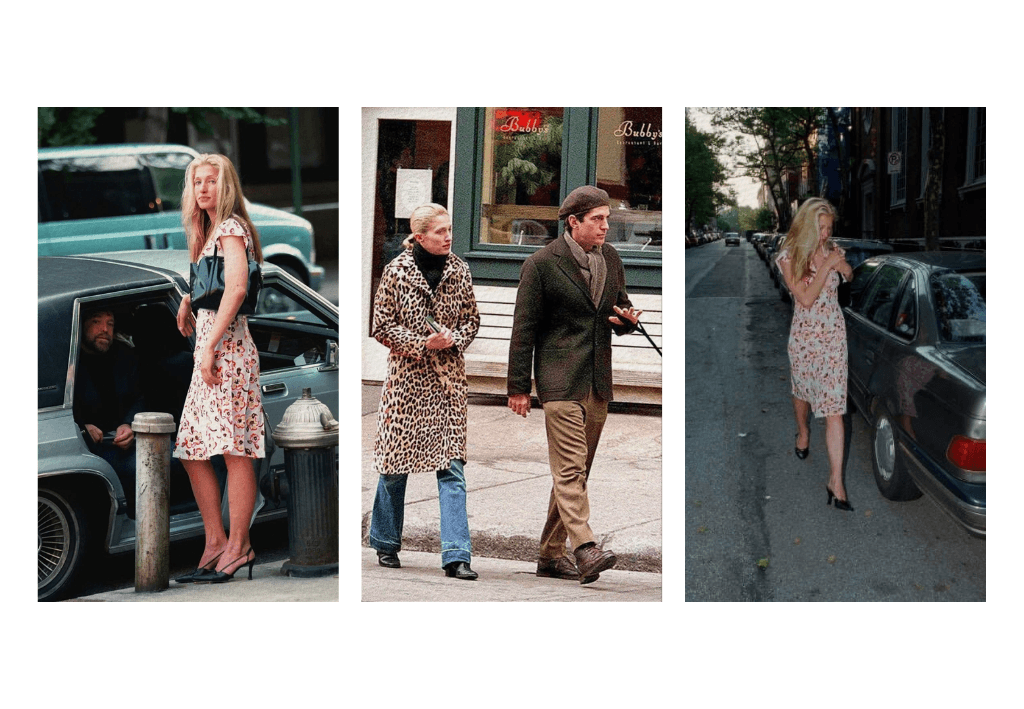
Fabrics:
· Matte silk
· Wool
· Cashmere
· High-quality cotton
· Leather
· Denim
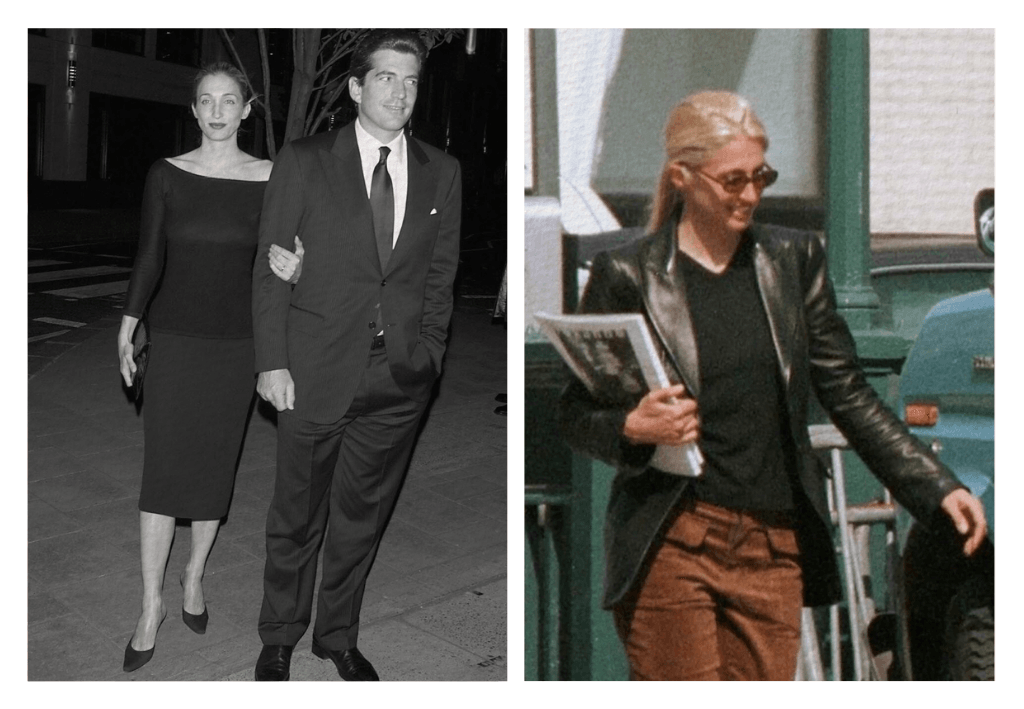
The textures were restrained and high-quality, without any “flashy” shine or distracting textures, which is exactly how they worked to achieve a clean silhouette and durability.
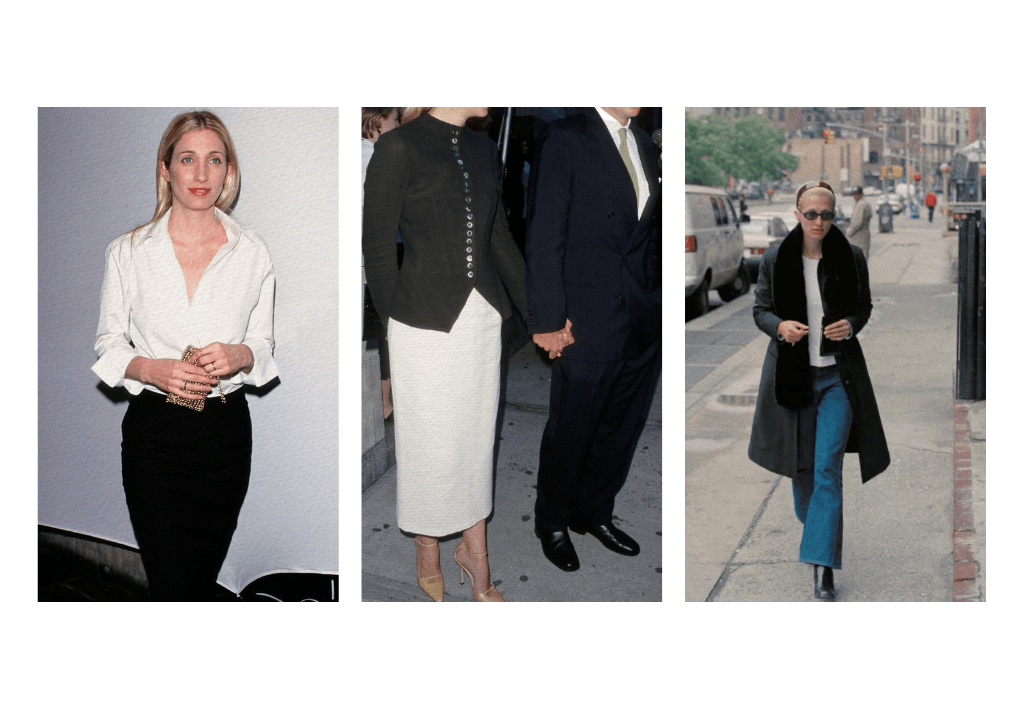
Principles of minimalism:
· minimal prints
· limited palette
· repetition of shapes
· absence of logos
· architectural cut
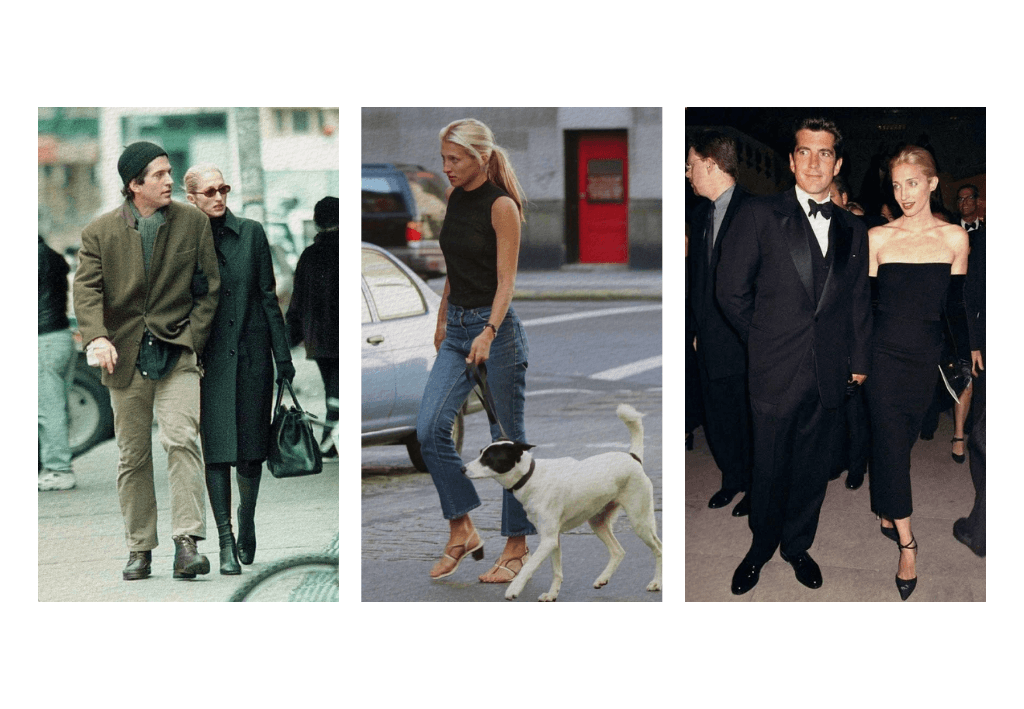
There was no place for fleeting trends in her style. She created a consistent system that she repeated over and over again. It was the repetition of shapes and architectural cuts that made her image recognizable. Carolyn deliberately avoided prominent logos—she even asked Prada to remove the logo from her ski suit.
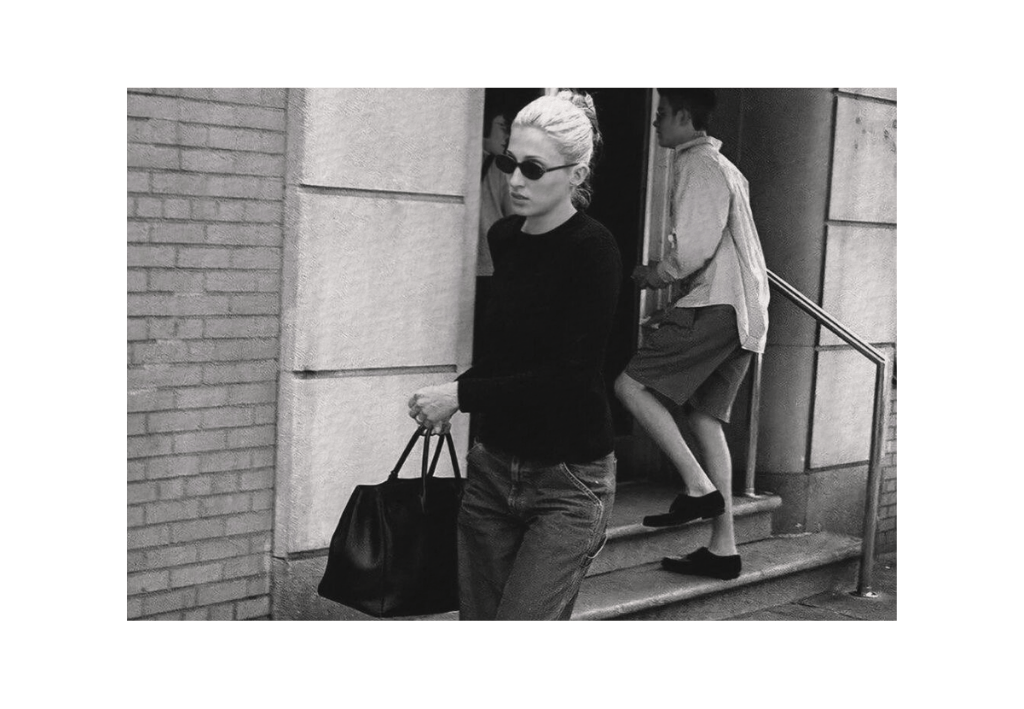
Visual geometry:
· Clear vertical lines in her looks
· Clean neckline
· Exposed collarbones
· Smooth hairstyle as an extension of the silhouette
· No “visual noise” in the portrait area
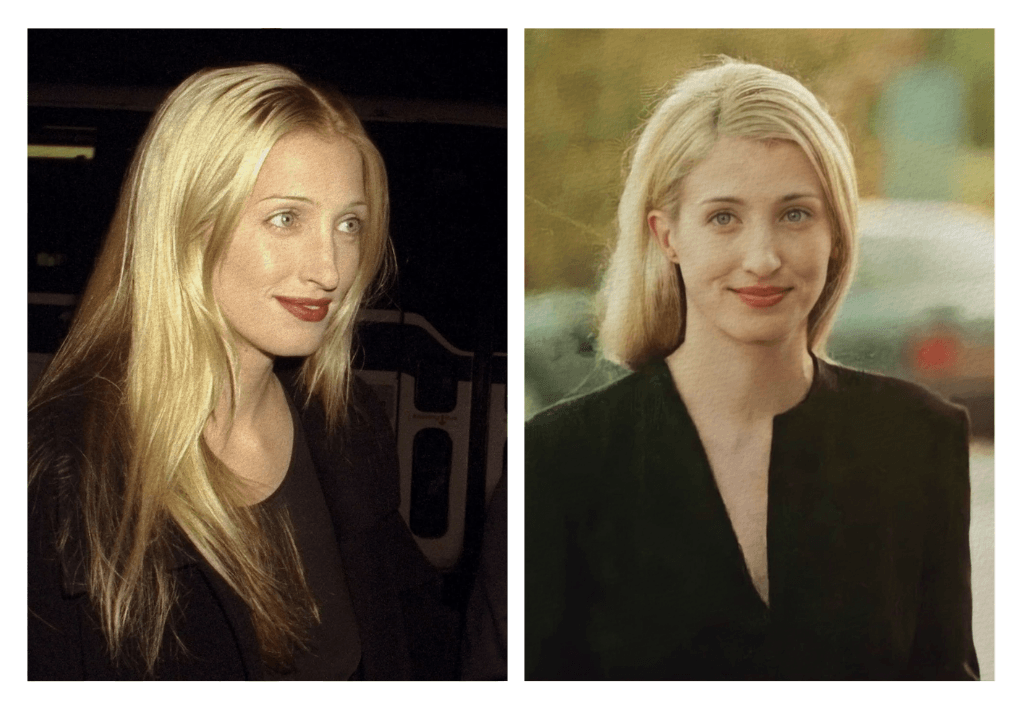
Her looks are architecture, not decor. She built them through verticality, proportions, and clean lines, and her light, “careless” hairstyle organically continued this geometry, completing the image without unnecessary emphasis.
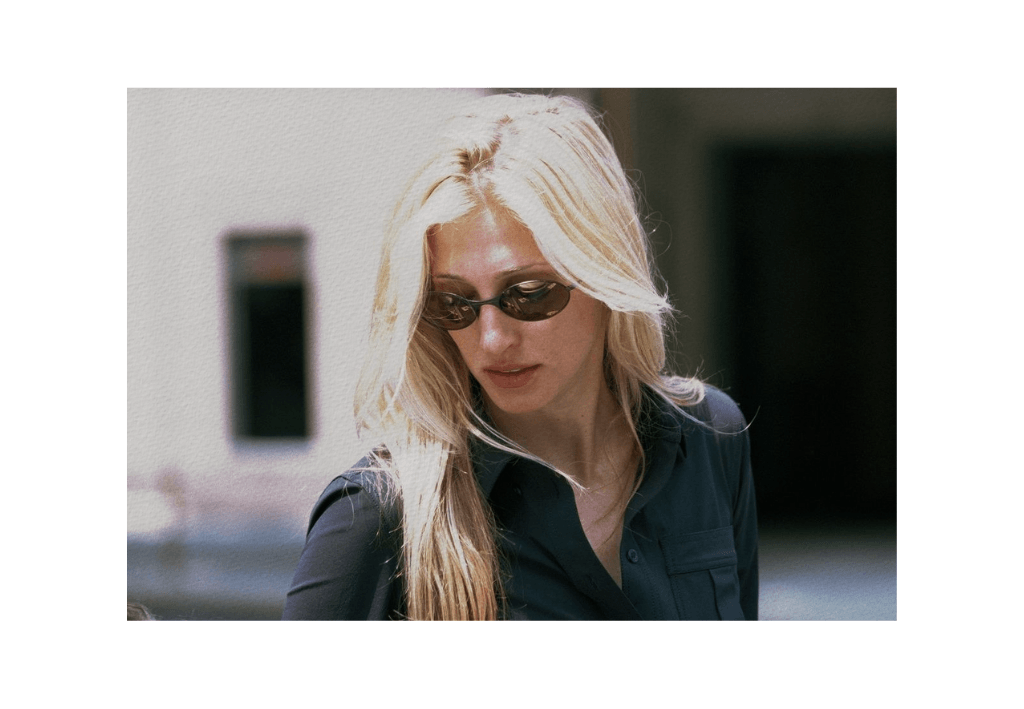
Style adaptation: how to integrate minimalism into different types of appearance
Minimalist aesthetics have no restrictions on body type or facial features. It is a style that is quite easy to use if you work correctly with your own proportions and lines of appearance.
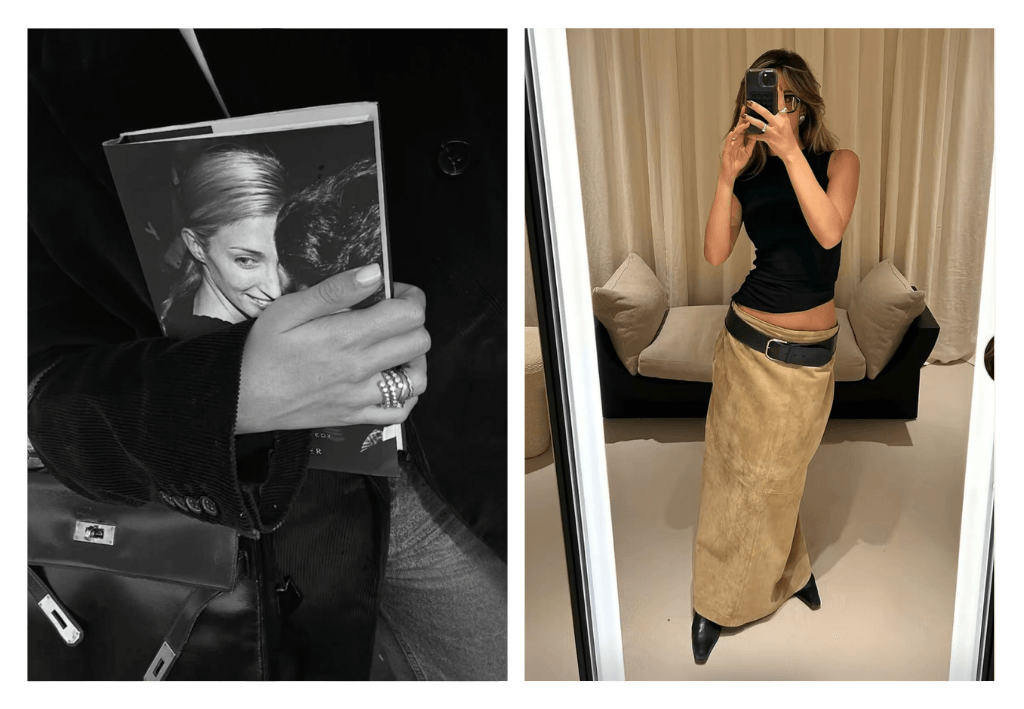
Several corrective techniques for different scenarios you may encounter when creating minimalist looks, and ways to solve them
Corrective technique for petite height:
In this case, it is important to emphasize the vertical and minimize the fragmentation of the silhouette
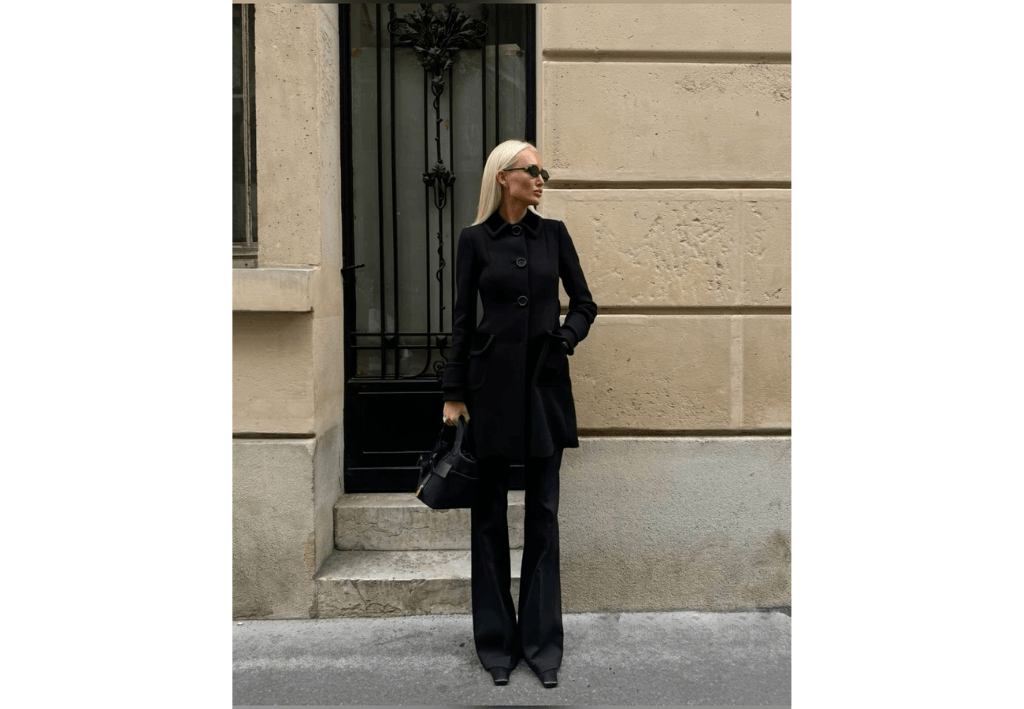
Recommended:
• monochrome looks
• shoes that match the color of waist-high garments
• minimum horizontals, maximum verticals
• high-waisted garments
I advise avoiding so-called “medium” lengths above the knee. It is better to choose either mini or midi
Low contrast appearance:
In this case, it is important not to “get lost” in overly dark, deep, or bright colors.
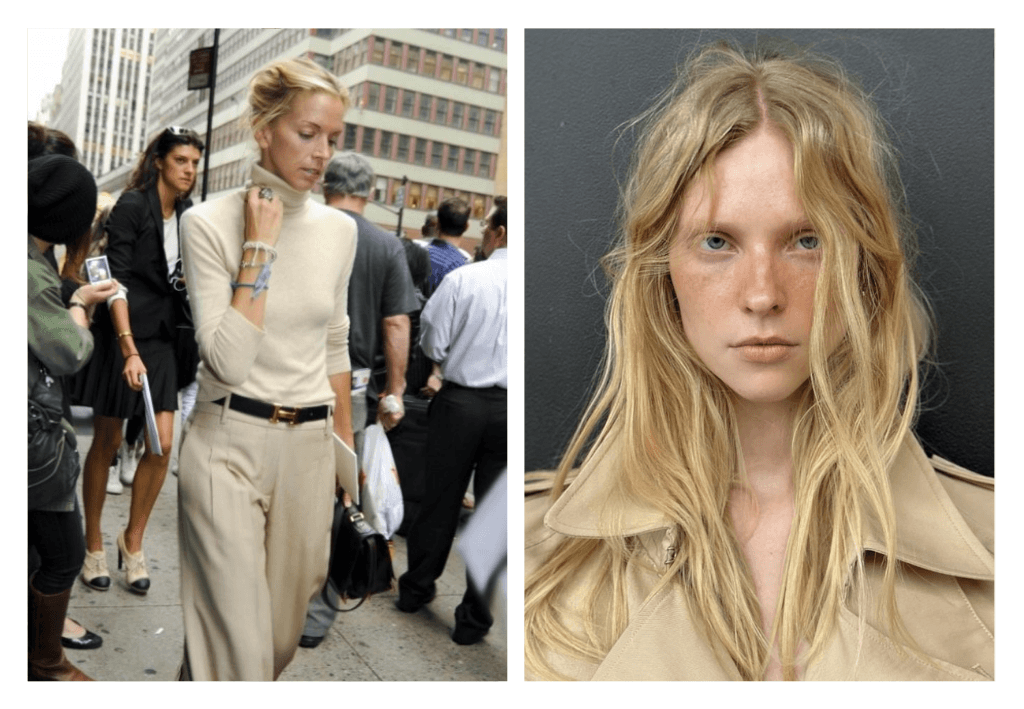
Recommended:
• Add a light base to the portrait area (for example, a white T-shirt under a black jacket).
• When wearing dark, deep colors in the portrait area, use the corrective technique of open shoulders, collarbones, or a deep neckline.
• Work with soft color transitions.
If the figure needs proportion correction:
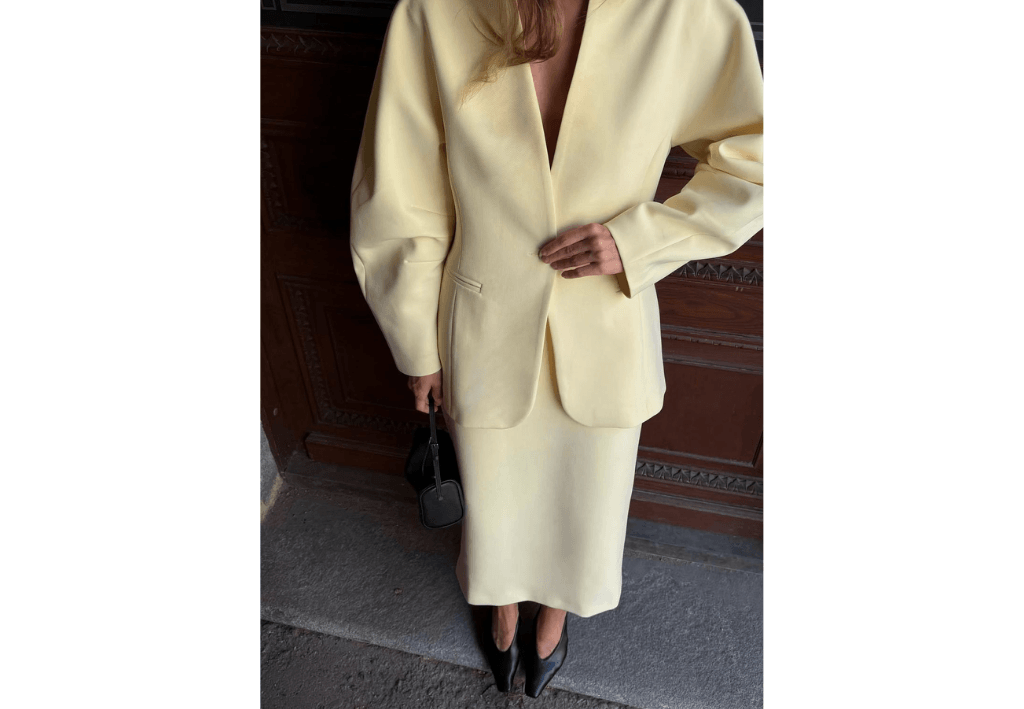
Recommended:
• Create a clear waistline through the cut if it is not pronounced
• Do not add extra volume in areas where you want to visually reduce proportions
• Do not use light fabrics (silk, satin) in areas that we consider problematic; instead, choose thick, structured fabrics that hold their shape.
Minimalism does not create proportions — it reveals them, so you need to adjust the shape to a specific appearance rather than copying it.
The author's position
Caroline did not become an icon because she wore a white shirt or a black coat. She became an icon because she did not look for role models. She did not try to conform to other people's ideas of the “ideal image.” She didn't imitate — she narrowed her choices to what suited her character, her lines, her identity.
It was this inner consistency that made her a muse. Today, she is copied, but her strength was not in things. Her strength was in the courage not to seek the ideal externally.
Following your identity is about being willing to follow your desires, even if they don't fit the trend. It's about refusing to imitate when you can create.
Share this post